The Rhythms of Point Reyes Wildlife
December 16, 2025__|__Aiko Goldston, PRNSA Wildlife Biological Technician
Philopatry: The tendency for an organism to stay in or habitually return to a particular area. From the Greek prefix ‘philo,’ meaning beloved, and ‘patry,’ meaning fatherland or homeland.
As PRNSA’s wildlife biological technician, the rhythm of my work throughout the year reflects the philopatric behavior of several species—primarily elephant seals, northern spotted owls, and western snowy plovers—who return to the same park sites year after year to reproduce.
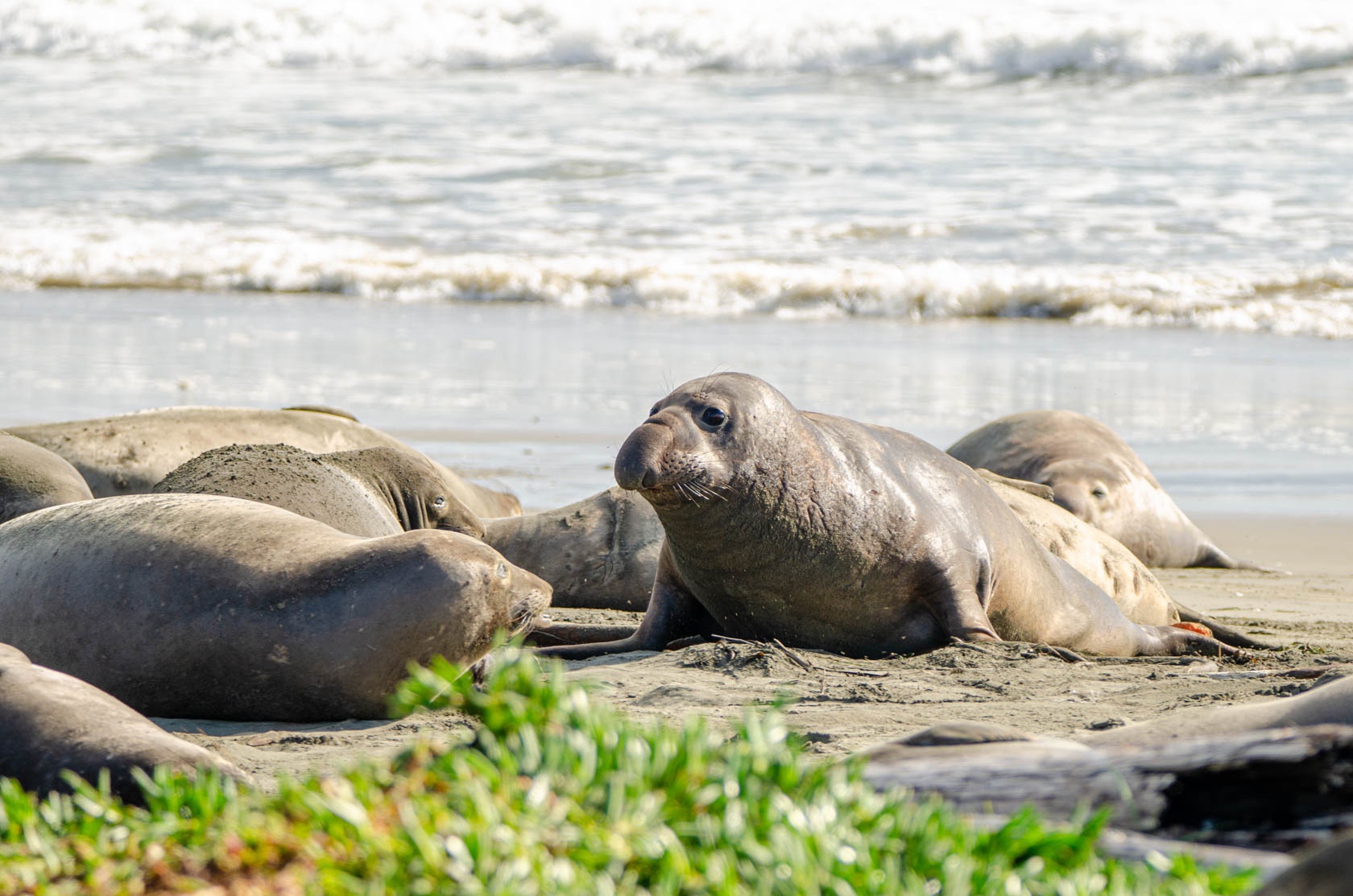
December marks the return of breeding elephant seals to Point Reyes beaches, and my work surveying the species is starting back up. As I arrived at Chimney Rock this past week, I was struck by a feeling of familiarity and warmth seeing the seals laying out on the beach. It felt similar to seeing a good friend, and made me excited to return to my field sites across the Seashore in 2026, continuing to deepen my knowledge, stewardship, and appreciation for this place.
Below, I’m sharing a bit more about what my work looks like throughout the year, and how I see the strong and vital connections the species we monitor have to the land in the Seashore. It’s philopatry in action, and illustrates the importance of collecting long term data and ensuring that wildlife habitat, crucial to survival, remains protected and well cared for.
December – March: Northern Elephant Seal
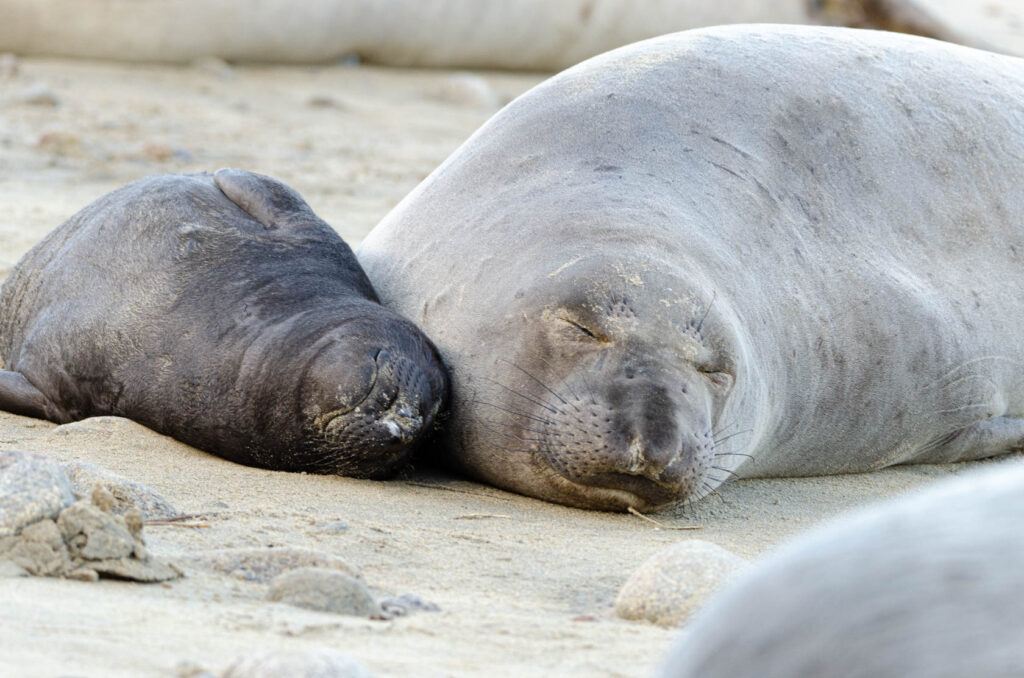
This time of year, the elephant seals have traveled thousands of miles from their feeding grounds to the cliff-backed beaches of Point Reyes, where they begin the cycle of reproduction once more. Each year, we apply pink flipper tags to hundreds of elephant seal pups to gain insight into their movement and survival. And year after year, we see individuals with pink tags return! While pink flipper tags are the most numerous, we also see green, white and the occasional yellow tag, signifying seals born in other colonies along the coast, yet finding their place in Point Reyes—some of them have been returning over a decade. Last season, we resighted a 14-year old cow from Point Reyes and a 16-year old cow, born at Año Nuevo.
March – July: Northern Spotted Owl
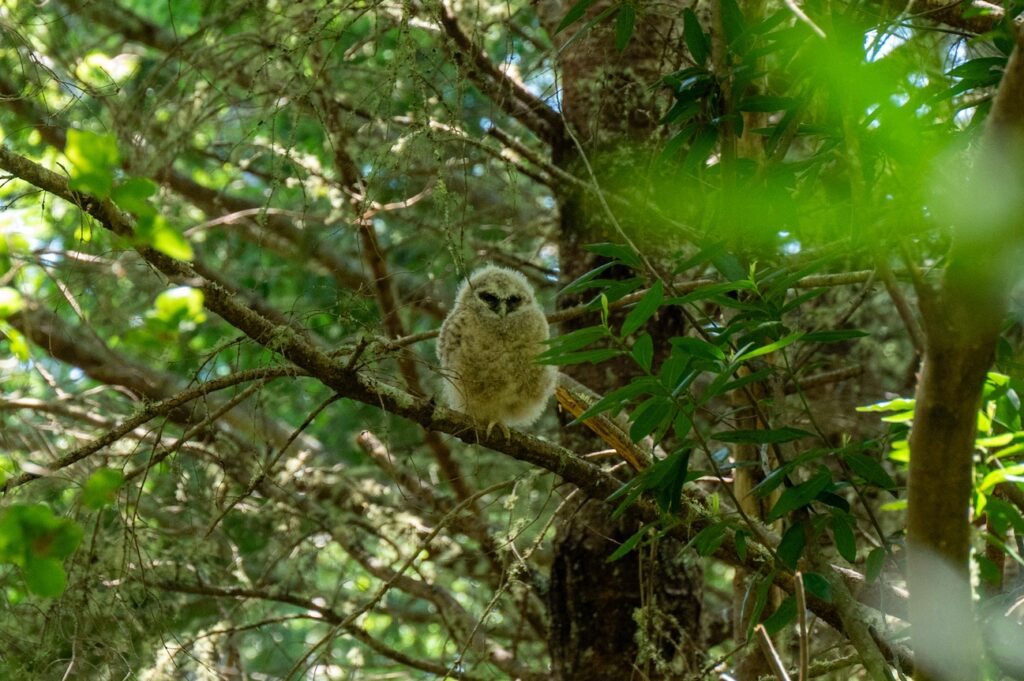
Spotted owls are a nonmigratory species found year round in the forests of the Seashore. Chicks hatch around June, and will leave their nesting site in the fall in search of their own territory. Once paired, spotted owls mate for life and remain in the same stretch of forest during the breeding and non-breeding season.
Marin County, including the Seashore, is home to the highest density of northern spotted owls, and 2025’s monitoring showed this high occupancy trend continuing. We collect data on the owls’ nesting locations and reproductive success, checking on nests several times throughout the season and observing as the chicks grow. Since monitoring began in 1999, the spotted owls have been consistently inhabiting the same territories, and even the same tree! This year, two pairs of owls nested in the exact same tree they had nested in a previous year.
March – September: Western Snowy Plover
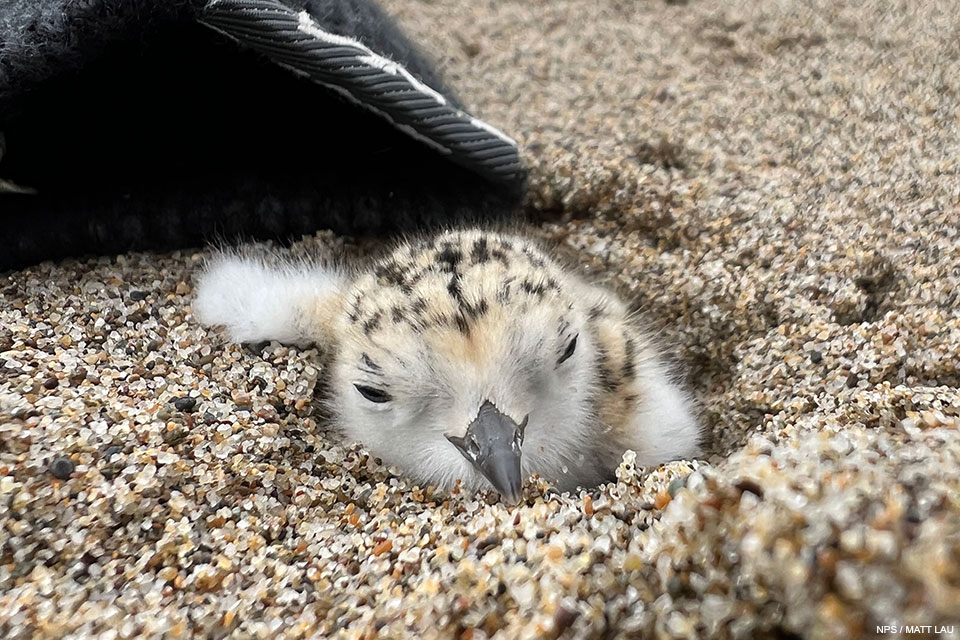
In the Seashore, snowy plovers breed along the sandy stretches of Limantour Beach, Drakes Spit, and the Great Beach. We apply tiny plastic bands in unique color combinations to the legs of snowy plovers here at Point Reyes, and up and down the coast. This helps biologists track an individual plover’s movement and productivity.
In late May of 2025, a new female snowy plover, WNOB (White, Brown, Orange, Blue) showed up on Limantour and quickly paired up and laid a nest in the foredunes. After some research, WNOB was found to be a year-old bird from the South Bay Area, born at Eden Landing Ecological Reserve in Hayward, and had hatched a three-egg nest at a salt pond at Don Edwards National Wildlife Refuge Complex just one week prior to being sighted at Limantour! (Snowy plover males take over caring for the chicks once the eggs hatch). WNOB was successful in hatching her nest and two of her chicks fledged.
Other Point Reyes plovers have exhibited similar behavior—moving from one breeding beach to another, illustrating the multiple and varying connections plovers can have with their habitats even within a breeding season. I’m excited to see where she shows up in 2026.