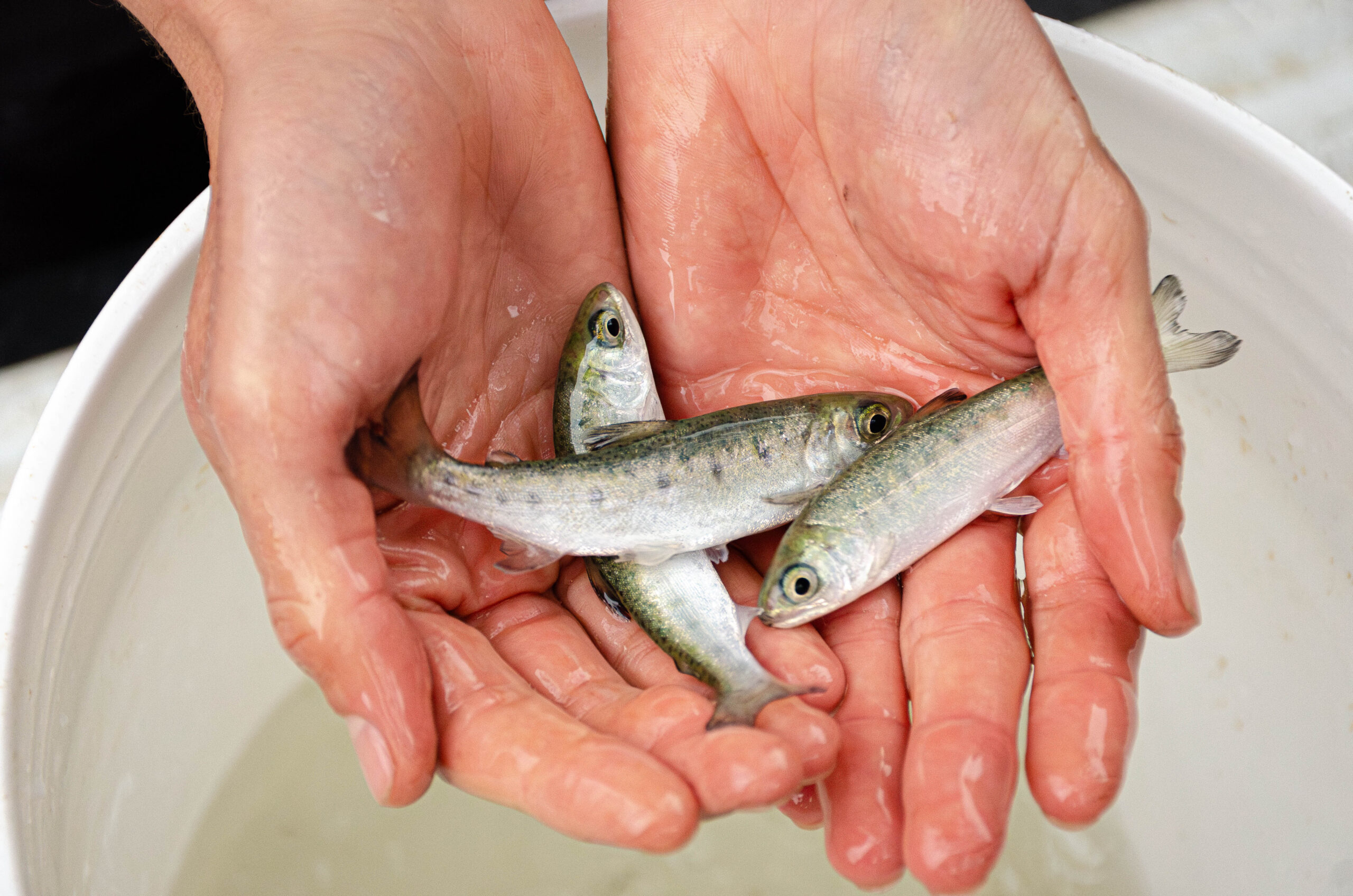
What goes into the release of thousands of coho salmon? A lot of planning, preparation, and, during a government shutdown, extra collaboration!
Last month, ~3,000 juvenile coho salmon were released into Redwood Creek at Muir Beach to help boost the watershed’s population of the endangered species. This was the third consecutive fall that juveniles reared at Warm Springs Hatchery in Sonoma County were released, and while this project is led by the California Department of Fish and Wildlife in partnership with Golden Gate National Recreation Area and the Army Corps of Engineers, this year’s timing saw partners showing up and getting creative to make the release a success, including staff and interns from PRNSA, Marin Water, Scientists in Parks, Watershed Stewards Program, Environment for the Americas, and Americorps.
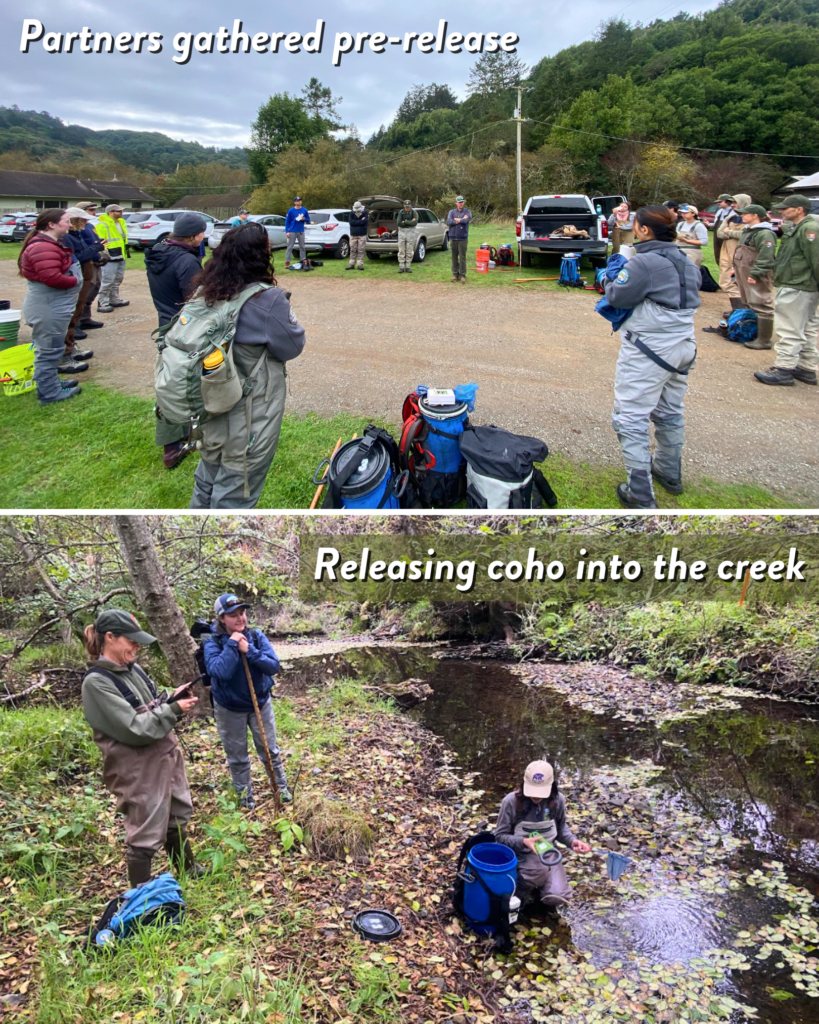
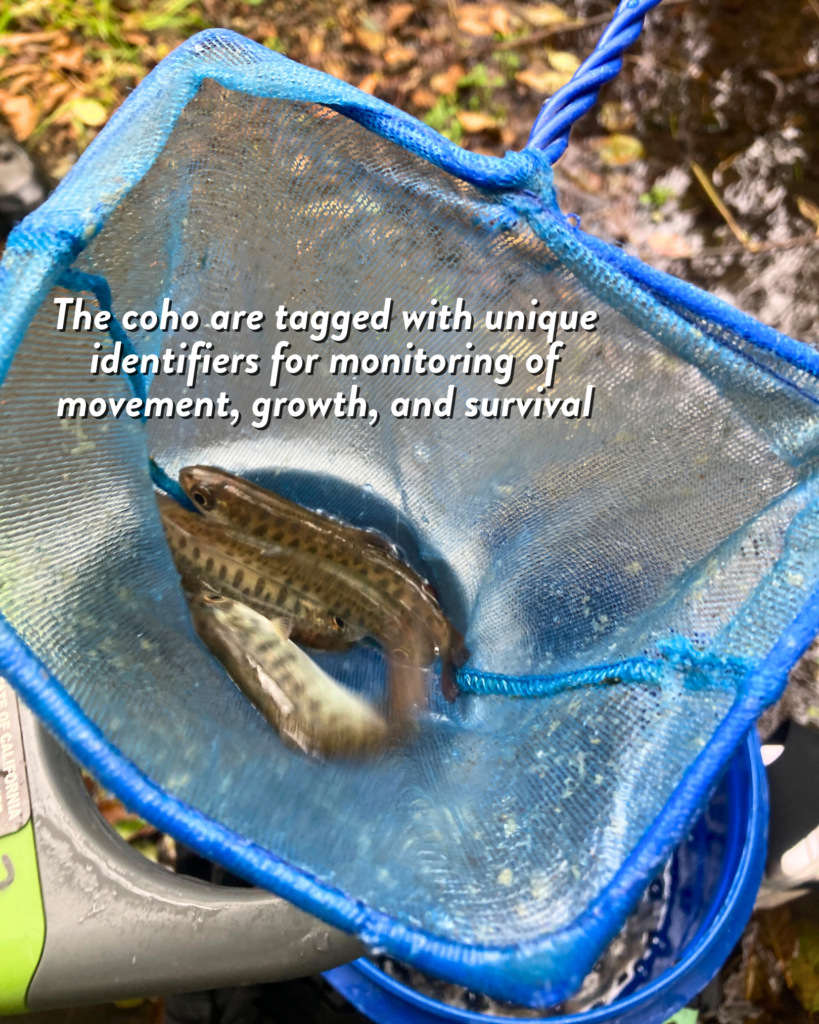
PRNSA Fisheries Field Crew Lead Brentley McNeill led the planning of the release on the NPS side, as Park Service staff were furloughed. Prior to the operation, staff spent two full days at Warm Springs Hatchery PIT-tagging coho, which will allow the tracking of individual life histories through the unique identifiers on each tag. On release day, CDFW provided extra staff, vehicles, and equipment to make the process easier, and because the Muir Beach parking lot was closed during the shutdown, California State Parks allowed use of their property near Kent Creek as a staging area. Some NPS staff were given exemptions and allowed to participate on the day of the release—it was great to have them there representing their work.
The hatchery-reared coho (2-4” in length) were dispersed throughout the stream into pools with good size, depth, and cover to maximize their chance of survival. Brentley says “We hope these releases will tell us something about coho survivorship within the stream, and if certain sections of Redwood Creek are performing better than others. This could help inform future restoration activities.” This is also one of the few watersheds outside of the Russian River system where hatchery augmentation occurs and a robust monitoring plan is already in place. The project complements CDFW efforts in the Russian River and allows for comparisons of success.
These juveniles have a long journey ahead of them! In the spring, the team will return to the stream to identify and measure the coho as they undergo the process of smoltification—physiological changes where the young fish adapt from living in fresh water to living in sea water—and migrate to the ocean. We hope to see them in high numbers, which would mean good overwinter survival.