Artist Spotlight: Point Reyes Flora & Avifauna with Stephanie Martin
March 10th, 2026__|__Point Reyes National Seashore Association
Stephanie Zeiler Martin is a painter and printmaker living on the California coast. Stephanie exhibits her art throughout California and is a member of the California Society of Printmakers. She is known for her delicate aquatint technique. Her work is held in the Library of Congress, Stanford Hospital, University of California at Santa Cruz, and private collections around the world.
See more of Stephanie’s work in-person at her new exhibit, Upwelling: Point Reyes Flora & Avifauna—on view at our Bear Valley Visitor Center through April 30th, 2026. Check out more of her pieces on Instagram: @stephaniemartinart
Q: How long have you been creating art?
Twenty years. In my mid-40s, while raising teenage daughters and teaching elementary school, I pursued a long-held dream and enrolled in evening art classes. I studied natural history as an undergraduate and have always been excited about California’s avifauna and flora, so those naturally became my chief subjects.
I’ve been enchanted by Point Reyes since my youth. The landscape, diversity of habitats, bird life, geology, history, the meeting of land and sea—it is larger than life.
Q: What’s a favorite moment—it can be big or small—that you’ve experienced in the park?
In the early 80s I was backpacking along the Wildcat Trail and found myself immersed in a grand wildlife scenario. Offshore floated a grey whale carcass being feasted upon by gulls. A ways up the trail loped a mountain lion, and if I had any doubt that it was indeed a puma, in the other direction was a bobcat.
Of course there are the many more intimate moments: admiring fog-drenched lichen, nesting flycatchers and trailside columbines, or attempting to sketch wildflowers during spring winds at Chimney Rock.
Q: Has painting and creating etchings of flora and avifauna changed or enhanced your relationship with nature? How so?
Few things give me more pleasure than observing a plant or bird in the wild and sketching it. That deep attention yields so much. Time slows, and I get lost in wonder. If you sit awhile the plants will move! You can see the tepals unfurl and anthers dehisce if you stare at a leopard lily long enough. When I portray a bird, whether it is a songbird or a diving falcon, I need to imbue it with life. I’m not entirely sure what animates a piece–partly it’s about getting the eyes right–but I know when I have succeeded. (Or failed: not all etchings cross the finish line.)
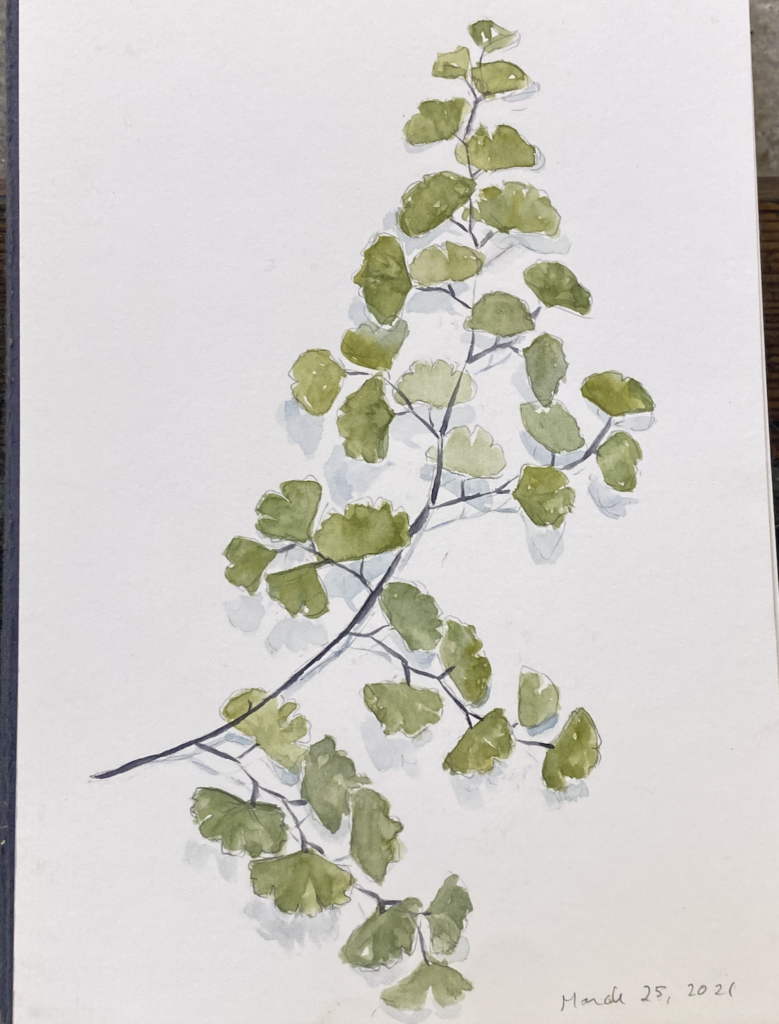
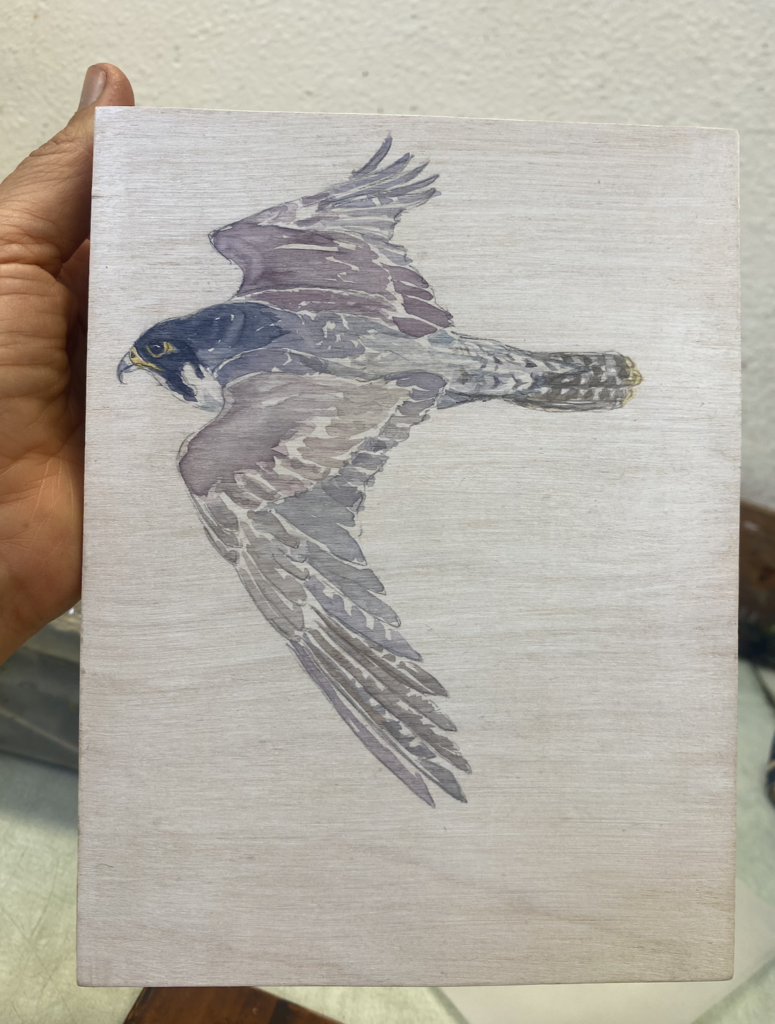
Left: Maidenhair fern. Right: Peregrine falcon on wood. Stephanie uses watercolors such as these as reference for her etchings.
Q: What do you love about printmaking? What draws you to this medium?
The etching process is long and complicated and many things can go wrong! To enjoy it, you must have patience and be willing to relinquish some control. While I have a vague notion of where I am heading with an image, the process itself has its own will. The acid might etch some unexpected textures, or an idea might come to me mid-process that changes my direction. There are wonderful effects in etching that no other medium can create.
Of course printmaking has the advantage of yielding multiples. I can take the same plate and print it with different inks or papers. I’ve printed seabirds on old nautical charts and the juxtaposition of the subject with the nuances of the chart is always a surprise.
There is also a wonderful communal aspect to printmaking. Since it requires a lot of equipment, it is often created in communal studios. I am extremely fortunate to use the print studio at U.C. Santa Cruz as a volunteer monitor, and work alongside talented art students.
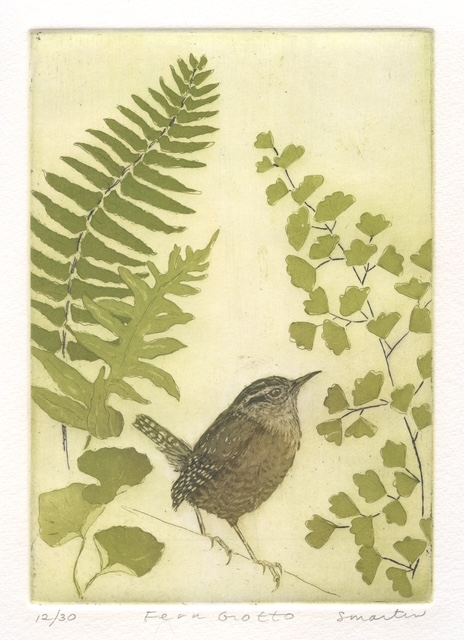
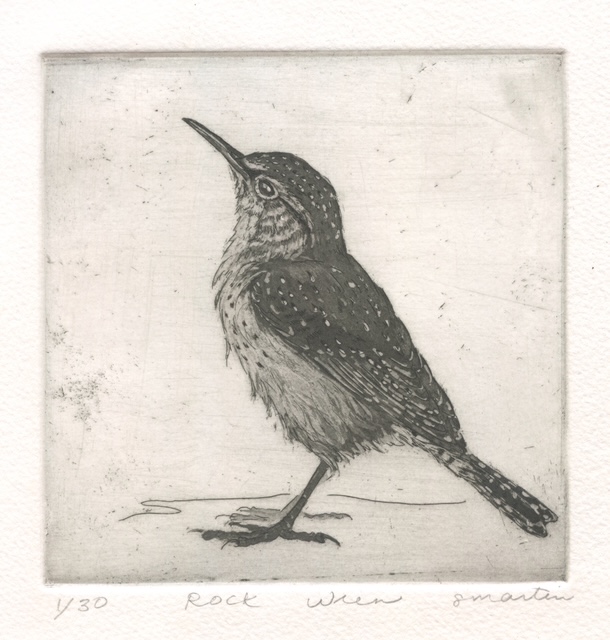
Left: “Fern Grotto.” Right: “Rock Wren.”
Q: Can you explain your printmaking process? How do you create the etchings from start to finish?
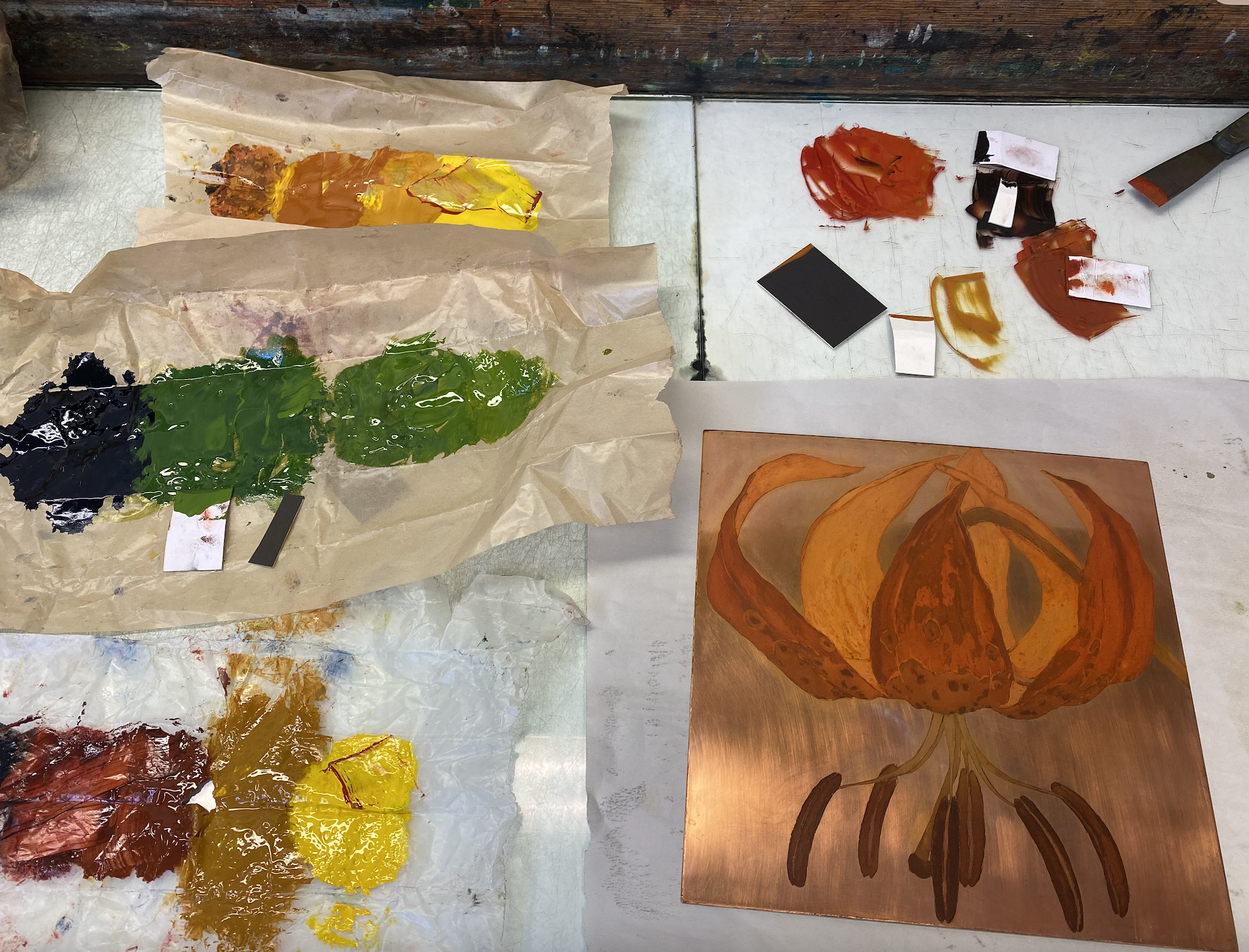
I winnow through my sketchbook to select the images that are compelling enough to develop into an etching. Is the pose interesting, the composition satisfying? Will this be better suited as a black and white or color image? Once I’ve settled on an image and composition, I start the process of etching the plate. First I coat a polished copper plate with a waxy “ground,” and scribe through that coating with a needle tool. I immerse the plate in acid, which eats away the exposed areas to form channels that will hold ink and print as lines.
The next process I use is aquatint, which is a method to create areas of tone on the plate. It is rather tricky but I love the effect it gives, looking like one has painted with watercolor or ink wash. After a plate is etched successfully, I rub ink into the textures and wipe it off the surface. The inked plate is covered with damp paper, a wool blanket, and run through a press.
I often work in color, and inking those plates is an exercise in patience, as I hand apply one color, wipe the excess, and continue with the next color. Usually, all the colors are printed in one run through the press. (I occasionally use two or more plates.) Because of the hand work involved in every print, they are all slightly different.
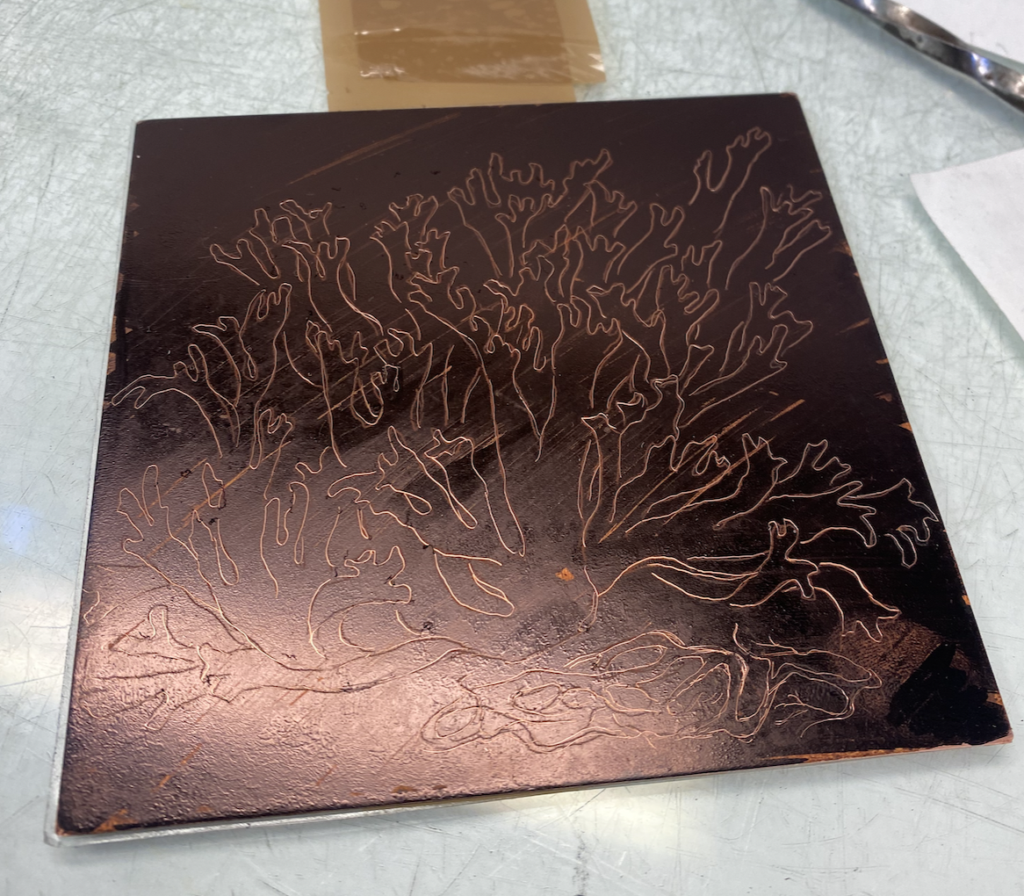
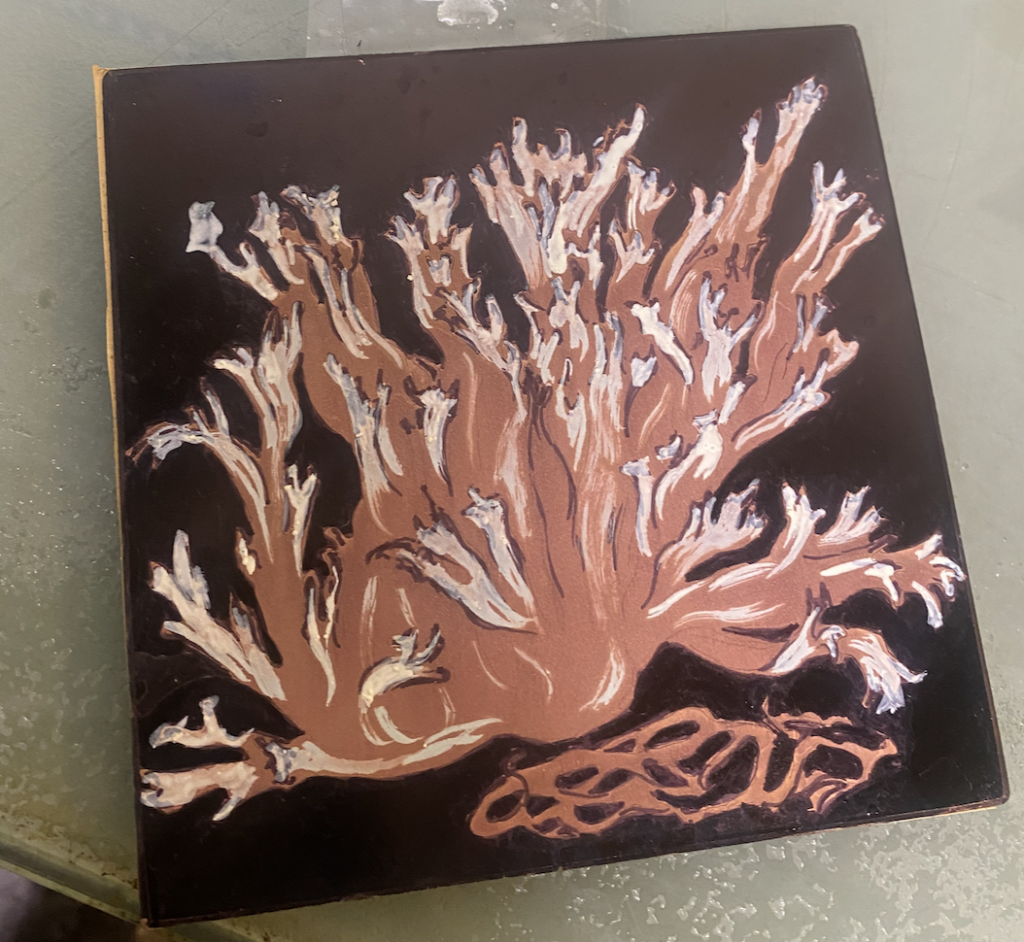
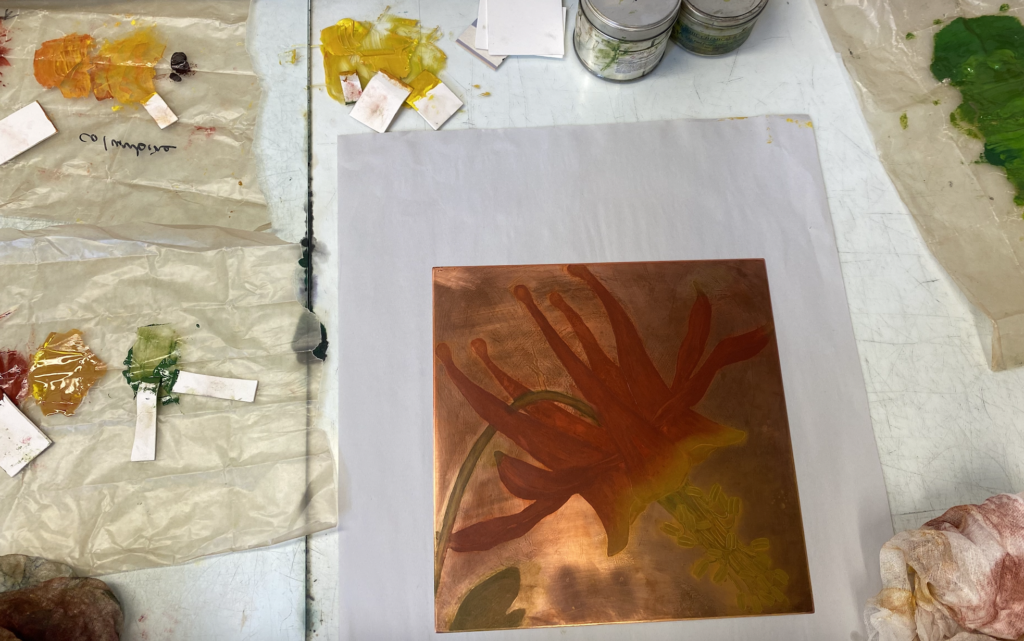
Left: Scribed metal plate. Middle: aquatint to create areas of tone on the metal plate. Right: inked plate, ready to be printed.
Q: What do you hope visitors to the exhibit will take away after spending time with your work?
I have a high regard for my subjects, and hope that my art conveys this. I want an etching to inhabit a life of its own and evoke in the viewer a sense of curiosity. Why does this bird have such showy plumes on its head? That delicate-looking songbird with slender legs and beak: do you know how tough this bird actually is? It migrates thousands of miles every year. The stamens draping from a Boxelder tree, aren’t they as interesting as the rare bird perched on the branch?
Hopefully that curiosity will lead to stewardship. My other aim is to get visitors excited about the curious process of etching itself. The world of printmaking is vast and varied, and etchings occupy a sweet little niche in that world.