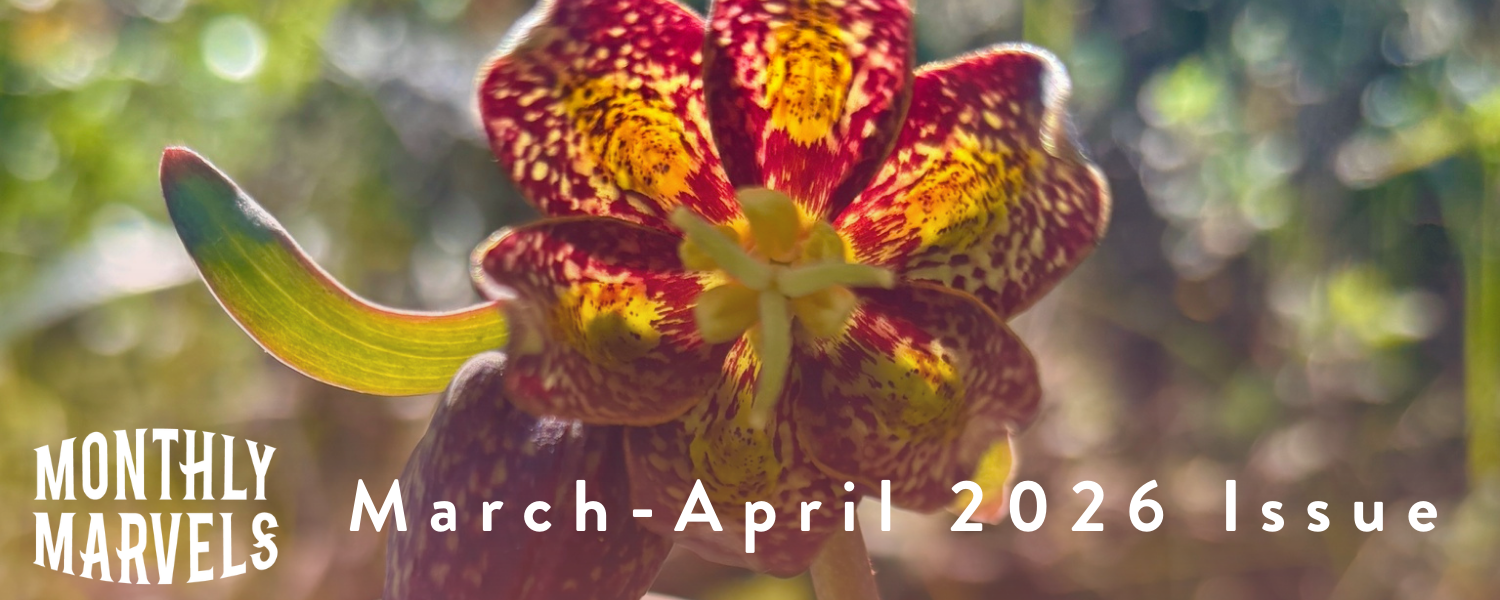
This March and April, Point Reyes is welcoming many new arrivals—from the vibrant hues of wildflower blooms, to migrating birds resting after their long flights to the Seashore, to babies born in treetop nests and along rocky shores. Explore this issue to learn about five of the park’s springtime splendors and how you can experience them yourself.
The Early Bird (and The Late Bird)
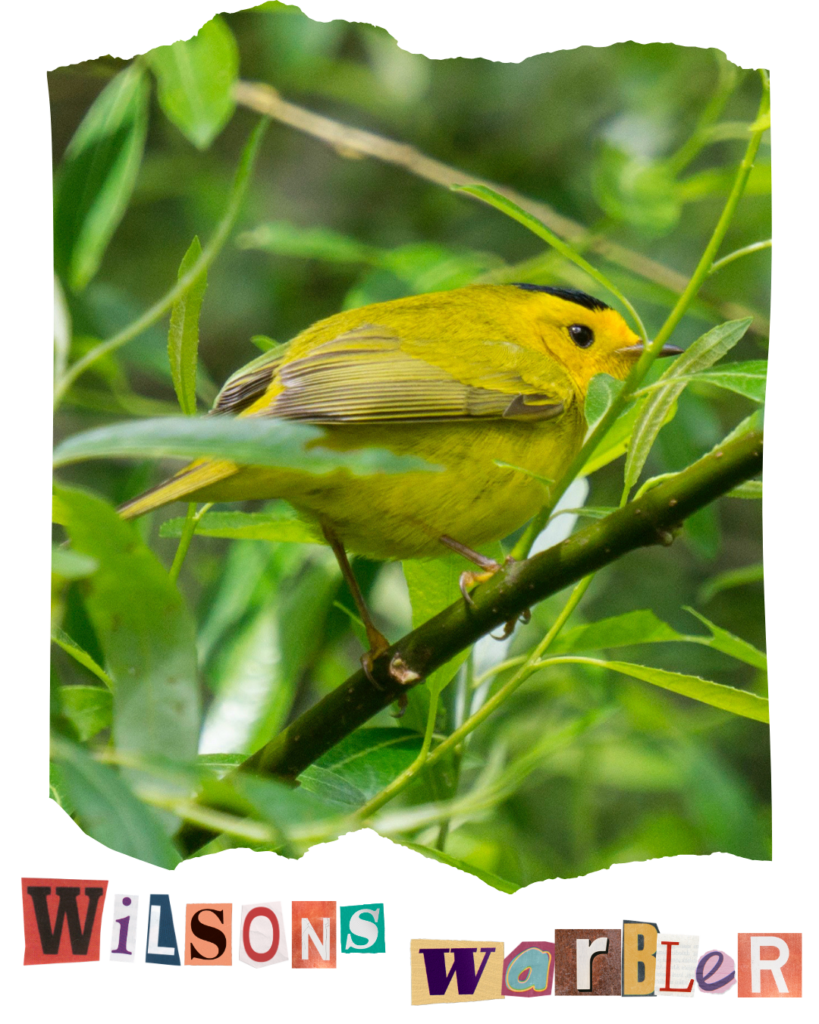
At the Palomarin Field Station, located at the southern end of Point Reyes National Seashore, Point Blue researchers string up delicate mesh netting across the forested landscape. In certain light, this netting is nearly invisible—especially to an unsuspecting bird flying after its morning meal. These “mist nets” allow researchers to capture, measure, and band landbirds to learn about the Seashore’s avian community.
Once a bird is in hand, researchers identify its species and take a variety of measurements, such as weight and wing length. With each bird that they capture and evaluate, the researchers are adding to a long-term dataset—essential to answering questions such as how climate change is impacting birds’ migration. As the climate warms, the timing of the spring green-up is shifting, resulting in a mismatch between birds’ migrations and the emergence of their preferred foods.
Some birds are shifting their migratory patterns in response to this mismatch. Point Blue’s long-term dataset has revealed, for example, that the Wilson’s warbler (Cardellina pusilla) has been arriving later, while the orange-crowned warbler (Vermivora celata) has been arriving earlier. Other birds, such as the Swainson’s thrush (Catharus ustulatus), have not shown change in their spring arrival date. Though some species are adjusting their yearly timing, scientists are concerned that many birds may not be able to adapt quickly enough to the rapidly changing climate.
Learn more about through the San Francisco Bay Area Inventory & Monitoring Network’s “Vital Signs & Climate Change” StoryMap, and visit the Palomarin Field Station to see bird banding in action! Bird-banding demonstrations are open to all and scheduled for three days a week until the end of April (before their summer schedule begins in May).
Whimsical Checker Lilies
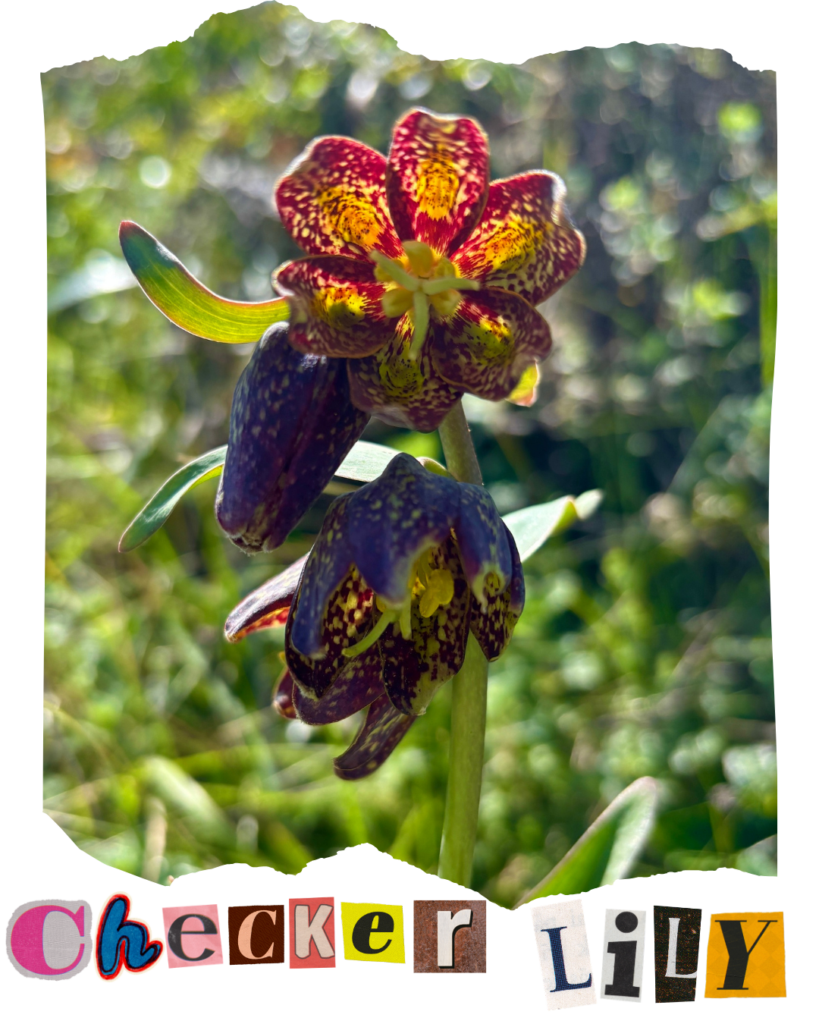
This spring, look out for the checker lily (Fritillaria affinis) blooming throughout the Seashore’s oak woodlands and coastal prairies. If you spot these whimsical blooms, take a careful look at their mottling and color—-this species hosts a wide array of variation. Some of these unique colorings were once considered separate species and subspecies, but they have since been condensed into one species. The more common coloration flaunts a distinct mottled pattern on its petals; the less common coloring is darker and has more subtle mottling.
Other lilies at the Seashore—some of which flower later in the year—include the vibrant orange-red leopard lily (Lilium pardalinum ssp. pardalinum) and coast lily (Lilium maritimum), the dainty white fragrant fritillary (Fritillaria liliacea), and the maroon giant wakerobin (Trillium chloropetalum), which is uncommon but may be found.
At the Seashore, observations of checker lilies peaks in April. Take a wildflower walk and consider recording your sightings on iNaturalist; this community science tool helps scientists gain important insight on species’ populations, seasonality, and more.
Resting Baby Harbor Seals
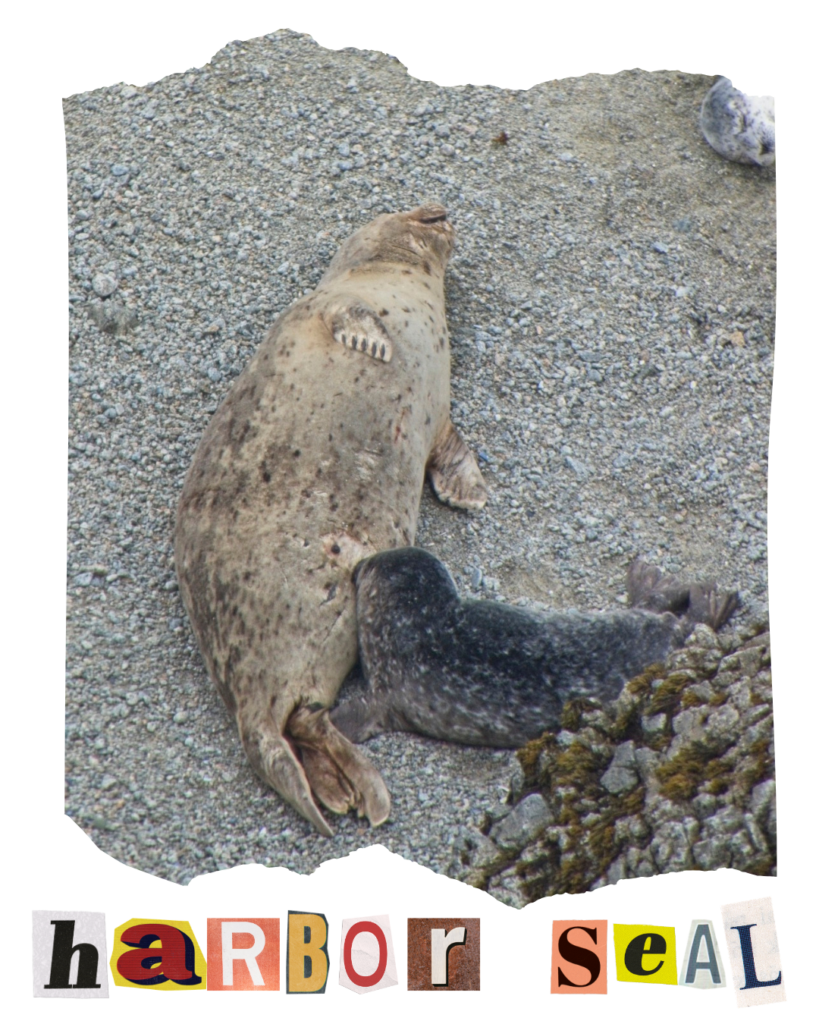
This spring, you may spot a small baby seal lounging on Point Reyes’ rocky shores…without a mother in sight.
Pacific harbor seal (Phoca vitulina richardii) pups are currently being born around the Seashore; the highest number of pups are typically sighted at the end of April. Mothers provide their young with high-fat (50%) milk, helping them balloon into plump weanlings twice the size of their birthweight. Unlike other seal species who fast while lactating (such as elephant seals), harbor seal mothers take up to seven hunting and foraging trips per day to sustain their milk production, feeding on various types of fish, squid, octopus, crayfish, crabs, and shrimp.
During these foraging trips, mothers leave their newborns unattended. Visitors often mistake these pups as orphaned or sick, unaware that they are simply resting until their mothers return to nurse them. In fact, visitors approaching the young seals is what can actually cause their mothers to abandon their pups; it’s important to stay well away from any seals that you may see.
Last year, the harbor seal monitoring team spotted 895 pups at sites in Point Reyes National Seashore and Golden Gate National Recreation Area, and the number of seals breeding at Point Reyes represents about 20% of the California mainland population estimate. During the pupping season, Drakes Estero is closed to water activities but you can spot harbor seals at Drakes Estero from the Estero Trail and Sunset Beach Trail.
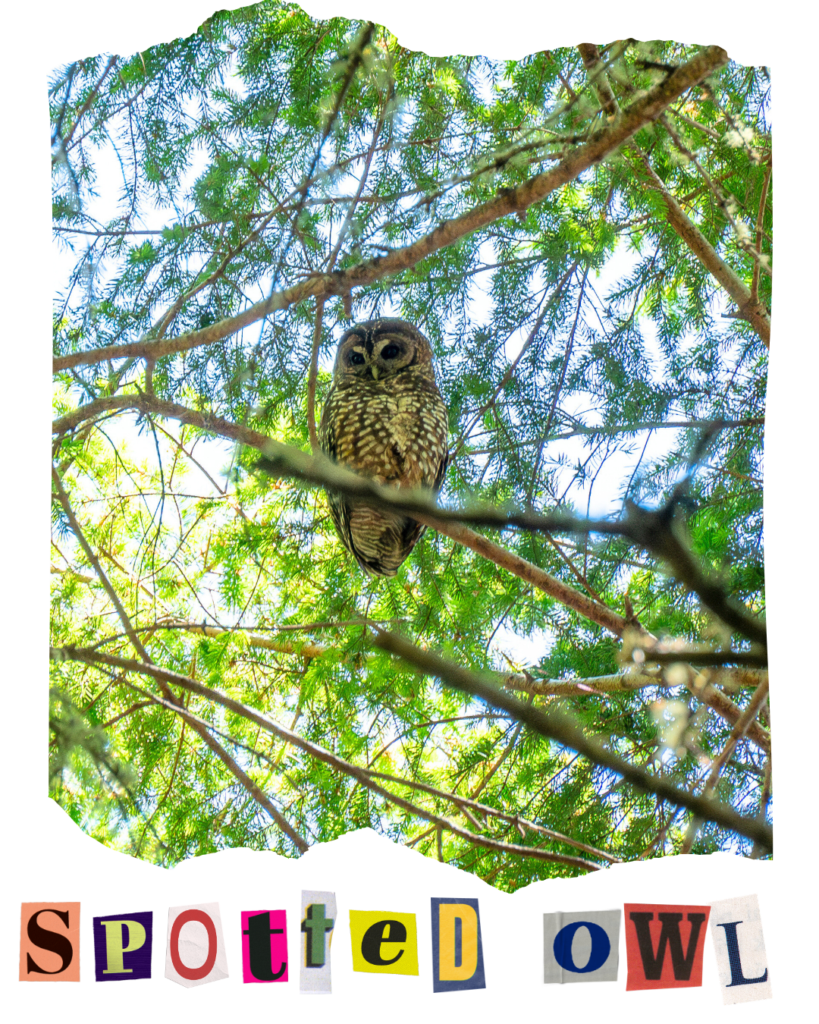
Spotted Owl Eggs
This March and April, northern spotted owls (Strix occidentalis) in Point Reyes’ evergreen forests are busy tending to one to four fragile, pearly gray eggs sheltered in their treetop nests.
Each spotted owl pair searches for a prime location to raise their families through the spring and summer, such as broken evergreen tree tops, forks and cavities, and even abandoned nests of raptors or squirrels. They don’t do much to renovate the homes, only scraping out a shallow depression in the woody debris or occasionally adding a few feathers to make the space more comfortable. After eggs are laid, males provide food while females work to keep the eggs warm using her brood patch—a featherless area on her belly with a high density of blood vessels.
This month, Point Reyes biologists are starting work to monitor active northern spotted owl nests at the Seashore. Marin County is home to one of the last stable populations of this threatened species—we’re grateful that they’re here!
Follow along with a PRNSA biologist on a northern spotted owl survey, and listen out for the northern spotted owl’s call and song while hiking through the Seashore’s evergreen forests.
Star Bright, Zodiacal Light
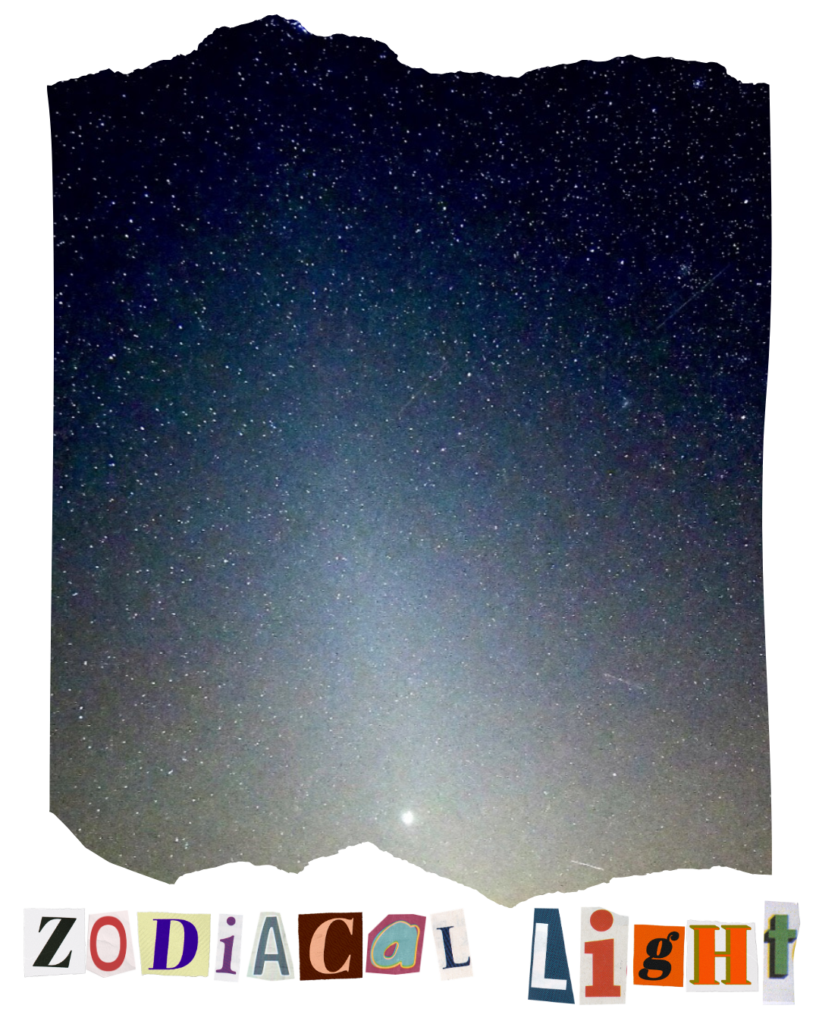
While many come to visit Point Reyes’ majestic arboreal forests, one must only look up to see another type of forest—the jungle of stars, planets, and other celestial wonders in the nighttime sky. With the Pacific Ocean to the West and coastal hills blocking much of the San Francisco light dome, Point Reyes is an ideal spot to view the night sky.
This March (especially during the equinox on March 20th) and early April, look out for the zodiacal light, a faint glowing pyramid of light spreading upwards from the western horizon. This magical illumination is the result of sunlight reflecting off of dust grains in space. Some researchers believe that these are particles which have fallen off of asteroids or comets, while others hypothesize that Mars may be ejecting the dust during global dust storms. During its expedition to Jupiter, the spacecraft Juno flew through the zodiacal dust; scientists were able to map the distribution of these particles for the very first time, leading to the hypothesis that Mars may be the source of the mysterious substance. Whether from comets, asteroids, or Mars, these illuminated dust particles are a sight to behold from Point Reyes’ night skies.
The best time to see the zodiacal light is in early evening, about an hour after sunset. Allow your eyes to adapt to the darkness for about 20 minutes, and look towards the western horizon to spot this springtime marvel.
DarkSky West Marin hosts a monthly stargaze at the Giacomini Wetlands each new moon, led by Astronomer Don Jolley. Since the date and time of each month’s sessions are subject to weather, they are confirmed day-of through a message posted to the site. On a computer, look for Don’s updates on the right hand side of the home page, and on a phone scroll to the bottom of the home page to see the updates.