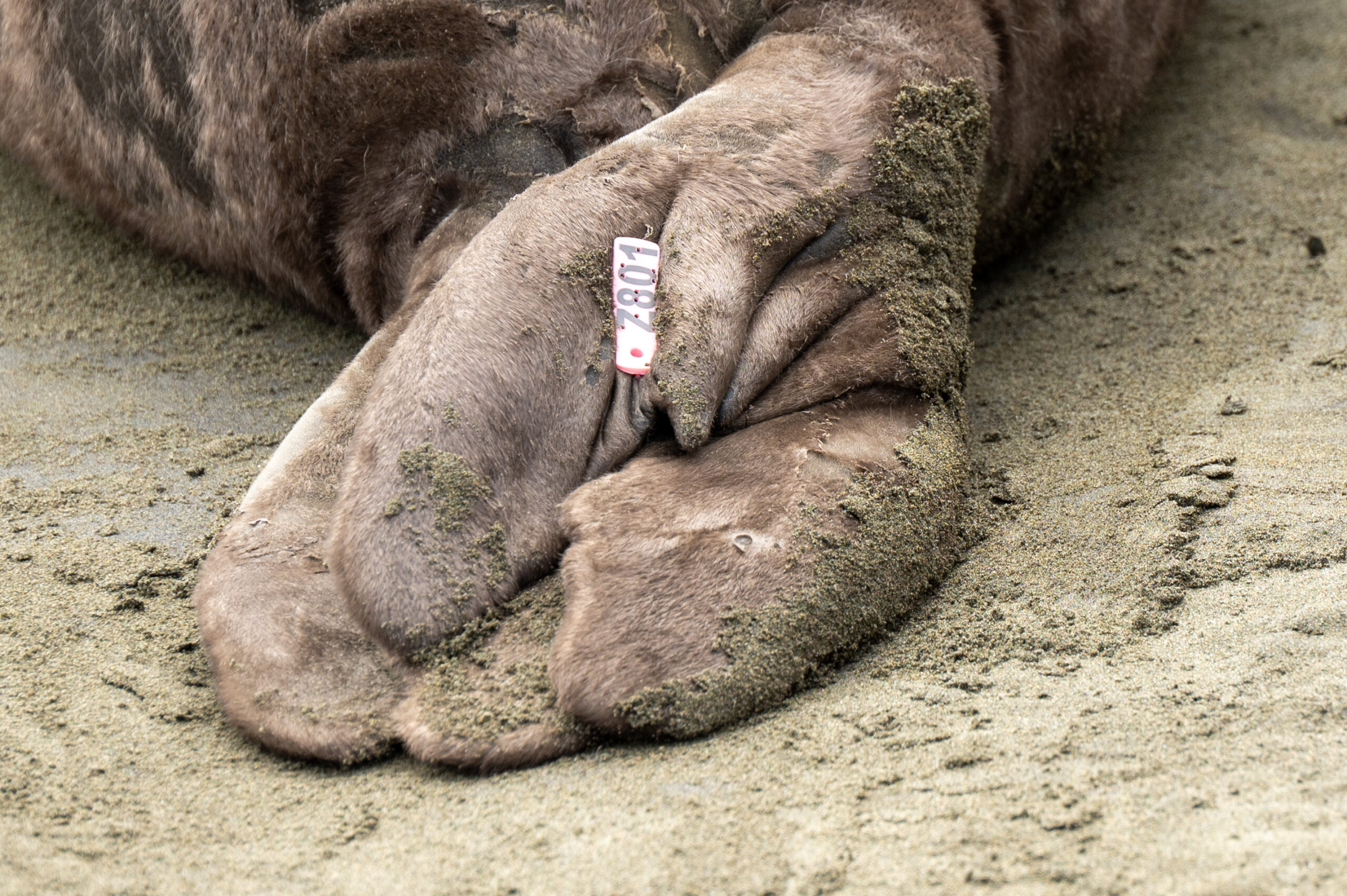
Behind Point Reyes Elephant Seals’ Pink Flipper Tags
April 29th, 2026__|__Photos & Story by Avani Fachon, PRNSA Multimedia Storytelling CoordinatorAcross Point Reyes National Seashore’s beaches, elephant seals flaunt an unexpected accessory—pink flipper tags.
During this past winter’s breeding season, NPS Marine Ecologist Sarah Codde and PRNSA Biological Science Technician Aiko Goldston applied flipper tags—key to tracking seals’ life journeys—to 324 weaned elephant seal pups. After nursing their pups for about a month, female elephant seals (cows) embark on a 2.5-month-long foraging trip in the ocean, leaving the pups to learn how to swim and find food on their own. After the mothers depart, Codde and Goldston use a special tag instrument to carefully apply identifiers to the webbing of the seals’ rear flippers while they are sleeping. To the weanlings, it feels like an ear piercing—just a pinch.
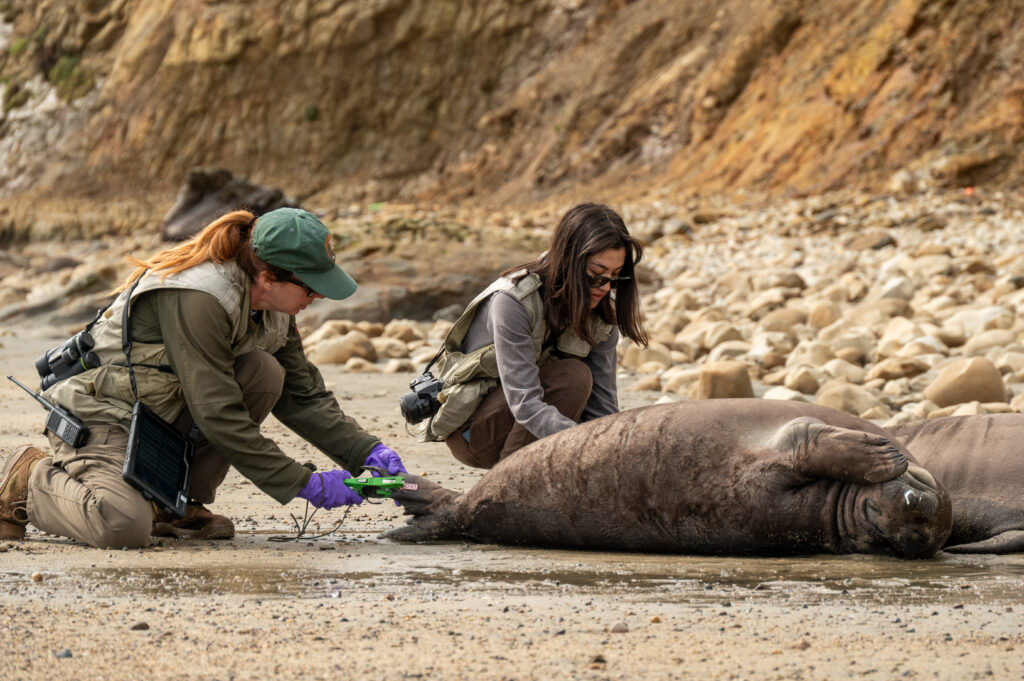
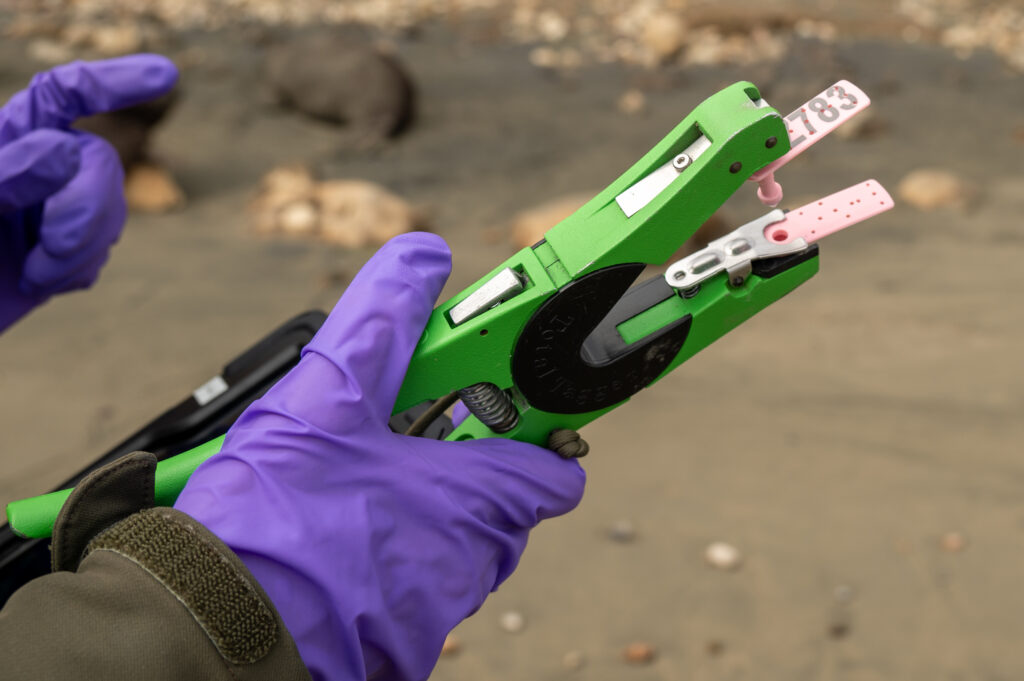
Left: Codde and Goldston carefully apply the identifiers to the webbing of the seals’ rear flippers while they are sleeping. Right: Elephant seal weanlings at Point Reyes receive pink tags, each with a unique alphanumeric identifier and drill hole pattern.
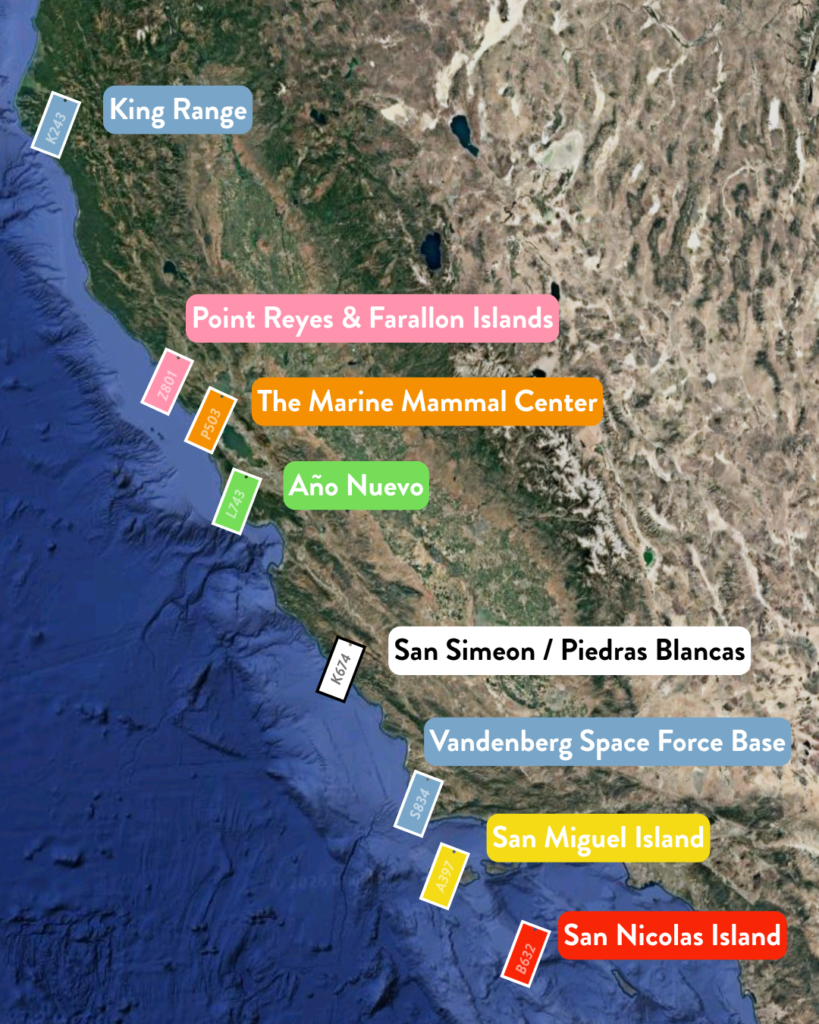
Each tag has a unique number, drill hole pattern, and color; all Point Reyes & Farallon Islands seals receive a pink tag, and seals at other colonies across California receive differently colored identifiers. If a seal with a pink flipper tag is spotted at King Range National Conservation Area, for example, researchers will know that it was born here at Point Reyes or the Farallones. This season, a seal with a green tag—”K450″ from the Año Nuevo colony—was recorded at the Seashore, its alphanumeric identifier unlocking information about this 5-year-old subadult male’s journey. Another seal with a pink Point Reyes tag was spotted at the coves past the Lifeboat Station; while too faded to read the printed number, Codde and Goldston used the tag’s drill holes to determine the identifier (“L780”) and learned that he was born at Gus’ Cove in 2016, making him 10 years old. These tags, like little passports, allow biologists across California to monitor life expectancy, site fidelity, reproductive success, and population trends:
“Though we have dedicated tag resight survey days, we are always on the lookout for flipper tags,” says Goldston. “It is exciting to see a faded pink tag because that means it is an older seal that has survived many migrations to and from Point Reyes!”
In addition to tagging weanlings, Codde and Goldston perform regular count surveys of the seals. While tagging is aimed at learning about the life journeys of individual seals, these count surveys provide insight into the health of Point Reyes’ elephant seal population as a whole. At each colony, the pair uses tally counters to record the amount of males, cows, and weanlings seen throughout the breeding season. On the day of the “peak count” during the last week of January, Codde and Goldston spotted 1,248 cows on Point Reyes beaches. This count is similar to last year’s total of 1,266 seals. The “peak count” for pups was 1,080, which is also comparable to last year’s count of 1,107 pups.
Left: Meet Aiko Goldston, PRNSA Biological Science Technician. Right: Codde carefully apply the identifiers to the webbing of the seals’ rear flippers while they are sleeping.
Monitoring into the Future
Each seal tagged and counted at the Seashore contributes to a valuable long-term dataset which adds to the story of this species. Over decades of monitoring through the National Park Service, biologists have established a baseline for the amount of variation normal for elephant seal communities—invaluable to identifying shifts or turning points in their population. Long term data allows biologists to distinguish significant shifts from the natural ebbs and flows that all populations inevitably experience over time.
At Point Reyes, elephant seal populations have consistently grown over the years following the discovery of the first breeding pair at the Point Reyes Headlands in 1981. The implementation of the Marine Mammal Protection Act and availability of protected habitat has allowed elephant seal populations to make a strong comeback since their populations plummeted to less than 100 individuals following intensive 19th century hunting in pursuit of their oil-rich blubber. Biologists hypothesize that the continually expanding colonies at the Seashore may also be attributed to climate change—more seals may be moving northwards in pursuit of a cooler climate as air and ocean temperatures increase.
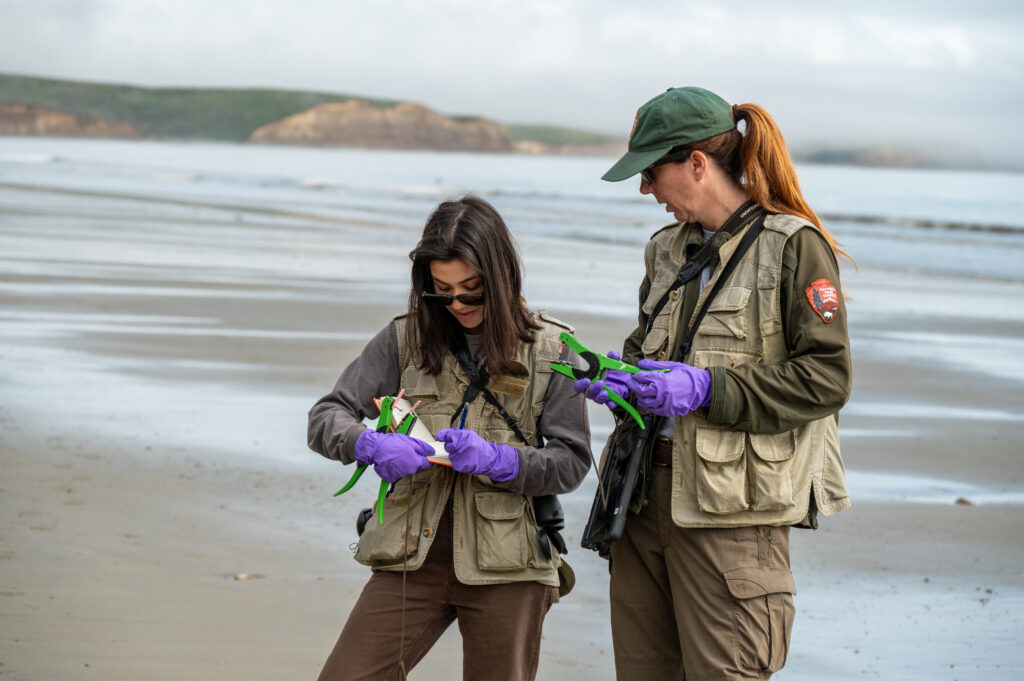

For each tag applied, Codde and Goldston record data on tag number, tag placement, and the seal’s sex. This information is part of a long-term dataset which helps biologists identify shifts or turning points in the seals’ population.
Elephant seals could experience a range of climate-related challenges in the future. Air temperatures, for example, may become too warm for pups who become overheated due to their thick layers of blubber; these young seals aren’t able to swim well enough to cool off at sites with rough water. Sea level rise and intense storm surges from El Niño events may inundate the seals’ haul-out habitats, presenting another challenge for land-bound pups. With one of the longest annual mammal migrations (13,000 miles per year), elephant seals are also important indicators of the health of their deep-sea environments. Long-term monitoring not only helps biologists keep track of how elephant seal populations are responding to these challenges, but provides a pulse on the health of marine ecosystems at large.
As for now, Point Reyes’ newly accessorized weanlings are braving the open ocean and learning how to navigate along their migration routes—we hope to see them again soon, whether back at the Seashore or at another colony along the West Coast.