Mapping the Purple: Participatory Science to Support the Endangered Myrtle’s Silverspot Butterfly
Words & Photos by Avani Skye Fachon | Illustration by Sophie Wood Brinker | July 28th, 2026
This article is part of Inflorescence, a series exploring the biodiversity of Point Reyes’ coastal grasslands and what land stewards are doing to preserve and restore this endangered habitat.
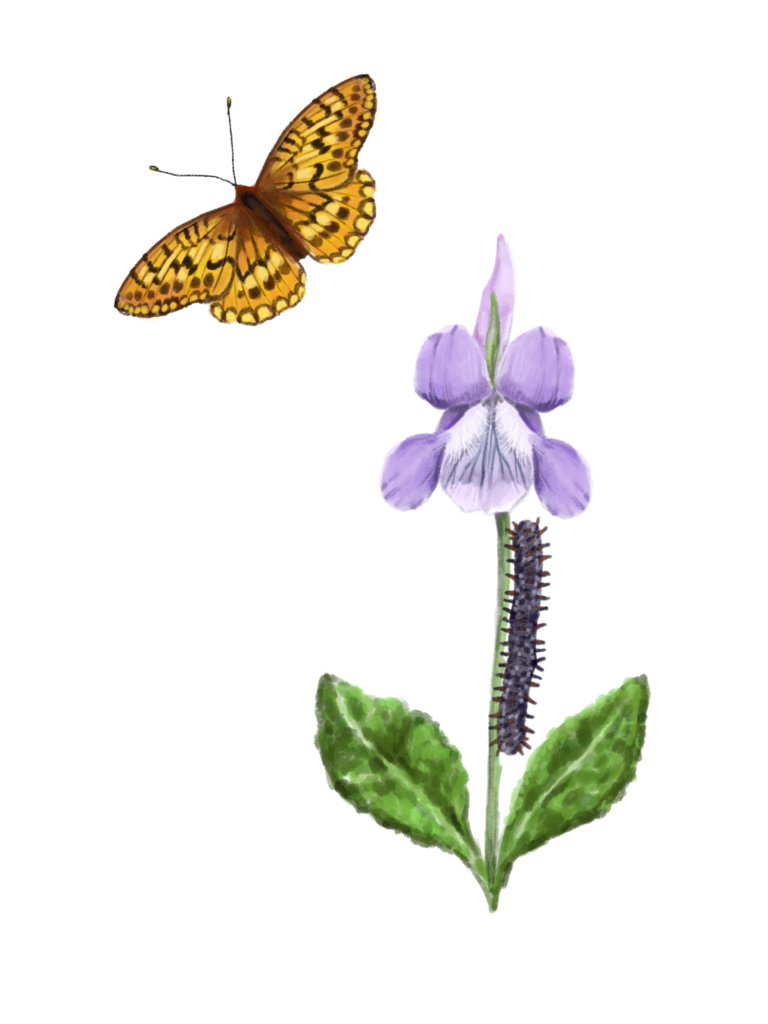
This summer, an ensemble of tiny feet is quietly drumming its way across the coastal prairies of Point Reyes National Seashore—tap tapping on glossy blades and pat pattering on hairy leaflets as they perform a yearly ritual for survival. Like Goldilocks searching for her perfect cot, endangered Myrtle’s silverspot butterflies use their sensitive legs to sample the unique chemical signatures of blue-eyed grass, California goldfields, checkerbloom, and other grassland vegetation until they land upon a leaf which tastes just right—the heart-shaped foliage of the Western dog violet (Viola adunca), the silverspot’s sole host plant. From June to August, adult silverspots lay their eggs on these leaves; when the small black and orange caterpillars emerge, they feed exclusively on the violets’ nutritious foliage. These selective butterflies spend 75-80% of their life cycles on the delicate dog violet.
The silverspots, however, aren’t the only ones in search of the Seashore’s violets. During the plants’ peak bloom time this April and May, groups of volunteers scoured the grasslands for the violet’s purple five-petaled flowers. This community-based effort led by Point Reyes National Seashore Association’s Volunteer Manager Cristobal Castañeda and Baxter Botanical’s Principal Biologist Tanya Baxter aimed to map the flower’s range and density throughout the Seashore’s grasslands in order to inform the park on how to better support the Myrtle’s silverspot. This golden-brown butterfly was listed as endangered by the U.S. Fish and Wildlife Service in 1992 and is currently found only in coastal Marin and Sonoma counties.
A Sea of Violets
In 2025, Baxter found herself reviewing a list of rare and endangered species in West Marin, and was struck by how little is known about the Myrtle’s silverspot’s population or the Western dog violet’s range within the park. Castañeda and Baxter connected in early 2026 at the California Native Plant Society conference. With the park’s planned coastal grassland land use change, the pair agreed that it was the perfect time to launch a participatory science pilot project to better understand the violet’s range. Since silverspot caterpillars only come out at night, the violets offer the best clue to understanding the whereabouts of this endangered species—helpful for informing population counts of adult silverspots when they emerge later in the year.
Their first step was to identify survey locations for the pilot project. While searching the park’s 17,000 acres of grasslands for the small violet would be nearly impossible, Baxter and Castañeda collaborated with Entomologist Dr. Richard Arnold—who had previously conducted research on the closely related Behren’s silverspot’s preferred habitat—to narrow down potential survey sites to those adjacent to coastal dune ecosystems. While silverspots lay their eggs on the leaves of grassland violas, the adults also depend heavily upon nectar provided by dune plants such as curly-leaved monardella, gum plant, seaside daisy, and yellow sand verbena during their June-August flight season. Baxter and Castañeda also analyzed maps of the park’s soil types to identify areas which consisted of fine sandy loam—a mixture of sand, silt, and clay which fits dog violets’ growing requirements. With these conditions in mind, they planned to cover areas in and around the Historic F Ranch, which is near the Bull Point Trailhead and adjacent to North Beach.
With the approximate target locations identified, the moment had come: it was time to head out into the field to sight and record each delicate purple flower sprouting within the sweeping landscape using the power of participatory science.
Over the course of eight survey days, volunteers walked along defined transect lines and recorded GPS points on their smartphones to mark the locations of the plants. Visitors from Marin and around the Bay Area came together to search for the small violets; community partners, such as participants of the FIRE Foundry Program, California Native Plant Society Marin Chapter members, and California Naturalist Program students, also pitched in their time to support the effort. Volunteers showed up with a range of experiences, from amateur and trained botanists to people who were surveying plants for the very first time—and they all worked together to successfully create a complete record of the dog violet’s range on Historic F Ranch, mapping around 9,000 violet plants.
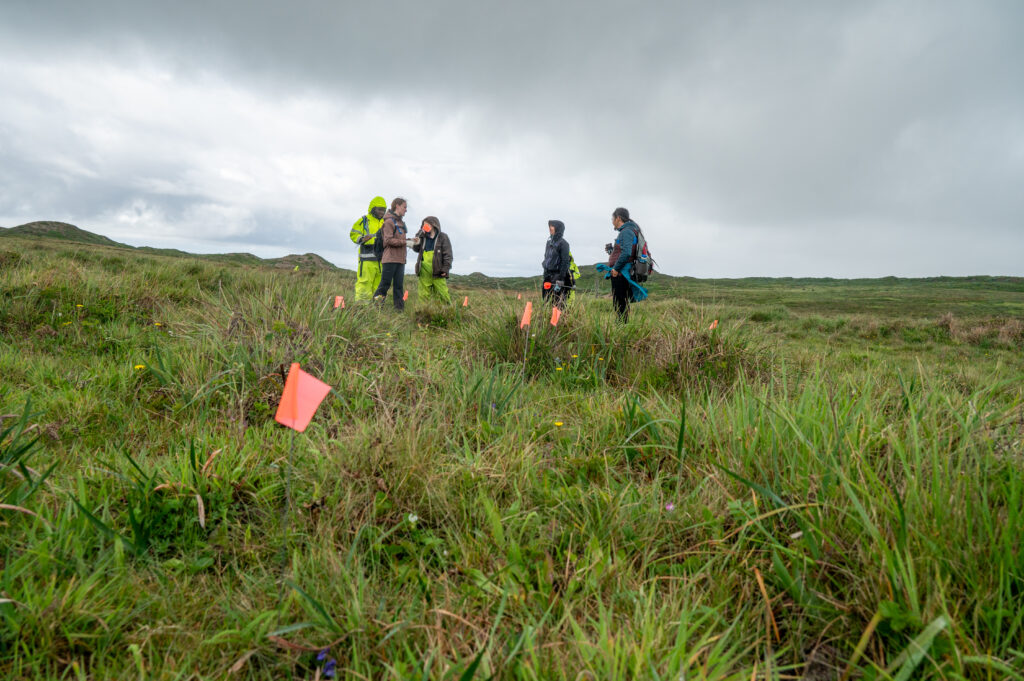
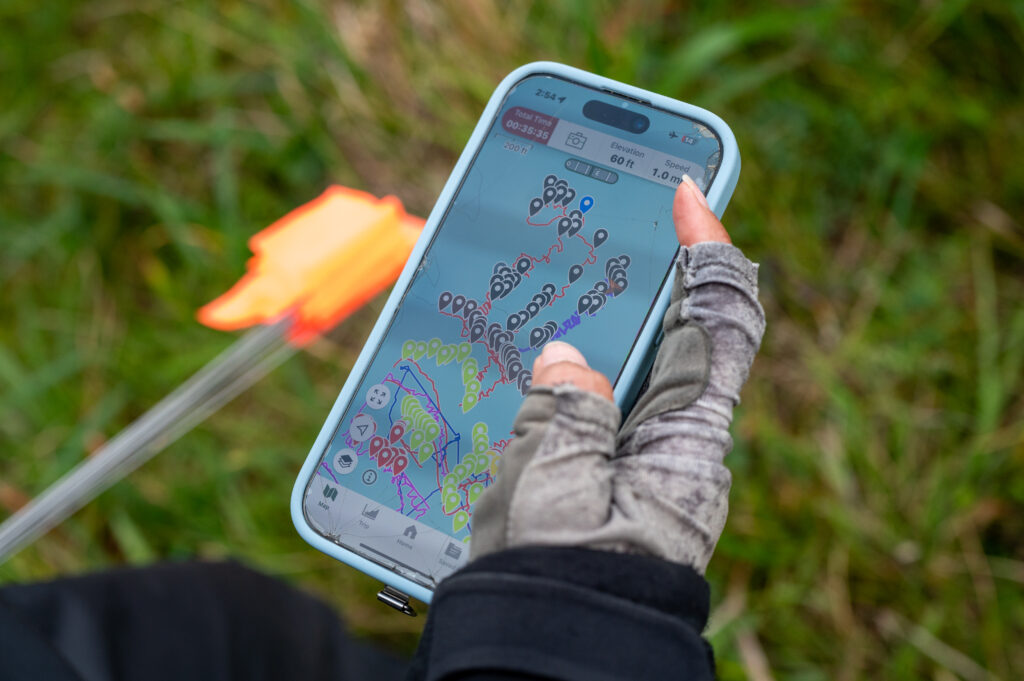
Left: Volunteers from around the Bay Area spent time mapping the violets across Point Reyes’ grasslands, using flags to identify areas that were covered. Right: Volunteers worked together to create a complete record of the dog violet’s extent in Point Reyes’ Historic F Ranch. They used the Gaia GPS app on their smartphones to map the locations of the violets.
In some areas of the grassland, volunteers discovered seas of purple—recording up to 300 violets along a single transect line and counting thousands of blooming plants during a single workday. During the first two survey days, volunteers counted over 6,000 individuals in bloom. These areas of high density offer the perfect conditions for the Myrtle’s silverspot to thrive. Despite their tiny size, silverspot caterpillars need many violas clumped together in close proximity to complete their metamorphosis into adulthood. The closely related Oregon silverspot requires at least 16 violet plants (which adds up to about 200 to 300 violet leaves) to successfully complete their transformation—and even with enough plant resources during their final stages as a caterpillar, they only have a 10% chance of survival to pupation. Since they share very similar biology and response to their habitat, Myrtle’s silverspots likely require a similar amount of plant material to survive.
“The goal is that as we’re marking more and more parts of this defined area, we’ll see where the high concentration [of the viola] is and where it starts to taper off,” says Castañeda. “That is a good way to see what is it about the characteristics of that habitat which may have contributed to there being more or less.”
In areas of Historic F Ranch where the viola was much more sparse, the violet’s growth was likely inhibited by introduced species which block sunlight and alter the soil composition. Some of these include ice plant, ripgut brome, velvetgrass, rattlesnake grass, and European beachgrass. The latter is often associated with dune habitats but may also sprout in grasslands’ sandy loam habitat, can grow up to three feet high and shade out the four inch tall viola: “There were lots of sections where we were walking, and it wasn’t worth it to survey because there wasn’t a chance there would be much other vegetation growing there due to the European beachgrass,” says Castañeda.
Century Seeds Flourishing
As Point Reyes undergoes a land use change and transitions from agricultural grazing to interim targeted conservation grazing focused on ecological outcomes, obtaining a baseline of the dog violet’s—and other native plants’—current range is critical to supporting them. Scientists are curious about how vegetation compositions may change, making close monitoring and tracking evermore important.
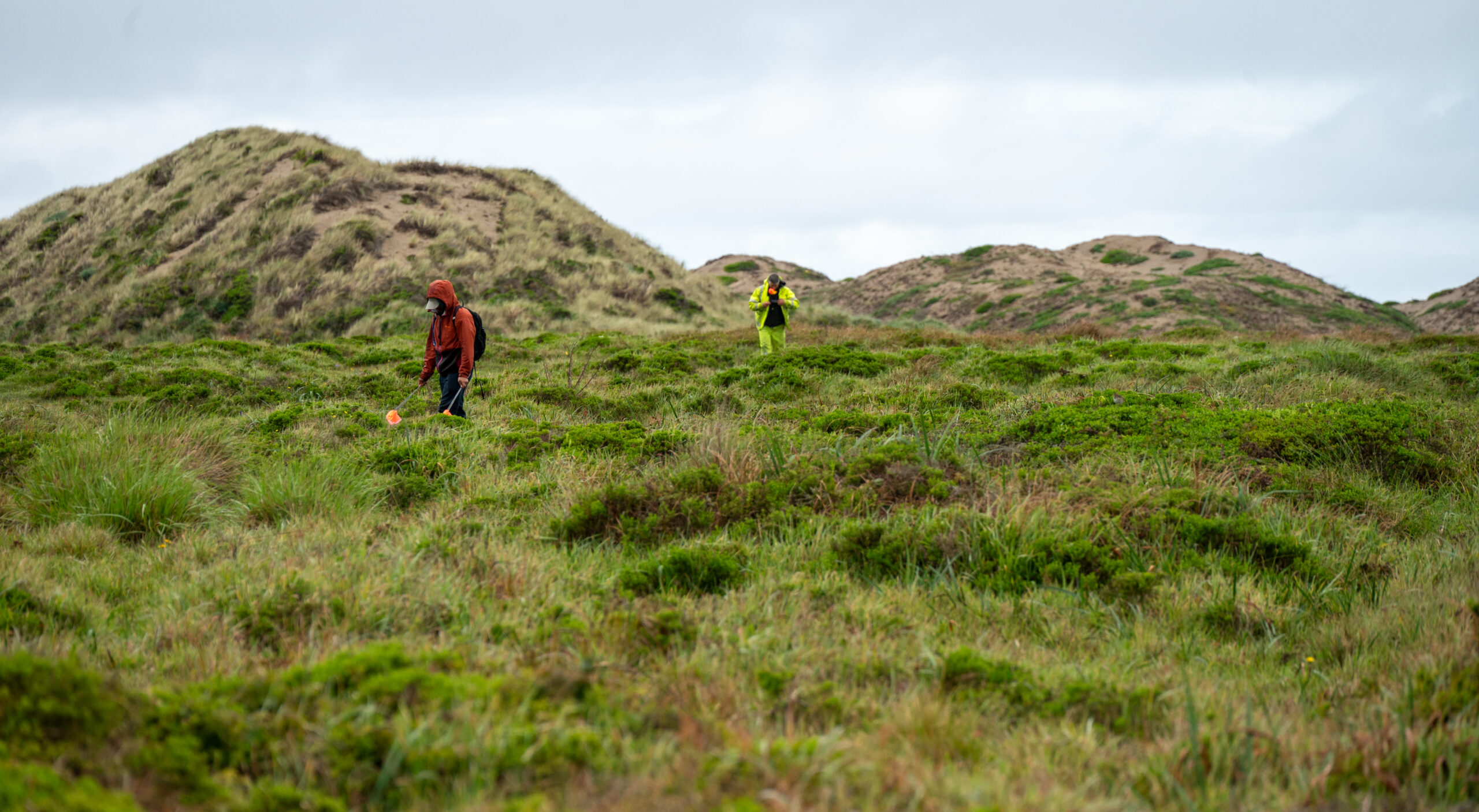
Volunteers survey Historic F Ranch for dog violets. As grasslands in Point Reyes undergo a land use change, scientists aim to better understand grassland vegetation composition and the needs of focal species—such as Western dog violet—to help adaptively manage, preserve, and enhance their habitat.
Grasslands are disturbance-driven ecosystems, and have historically been tended to through intentional burning by the Coast Miwok and grazed upon by elk, pronghorn antelope, and mule deer who wandered across the habitat. The National Park Service, Point Reyes National Seashore Association, The Nature Conservancy, County of Marin, California Native Plant Society, and the Federated Indians of Graton Rancheria are collaborating to identify data gaps about species in former ranchlands which will be included in targeted grazing¹ efforts. Mapping out the ranges of key species such as the dog violet will help the park and partners better understand the grazing locations, annual timing, and intensity which will be most supportive to the Seashore’s native flora and fauna.
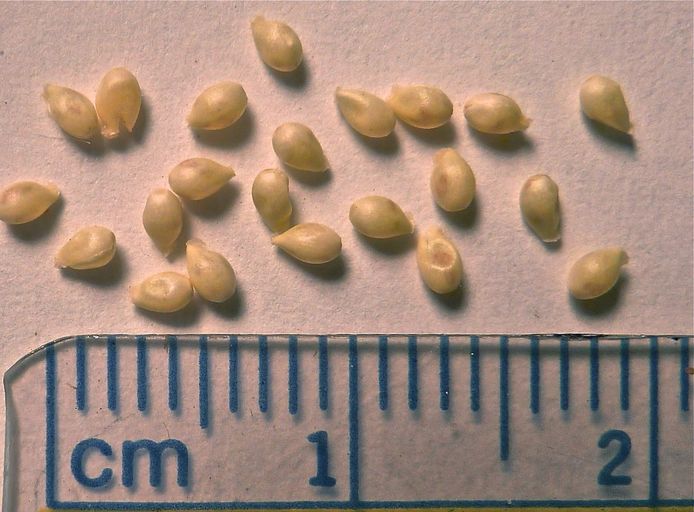
The dog violet has a seed bank which can remain viable for up to 100 years—their small, tan seeds are likely scattered beneath the grasslands’ soil, patiently awaiting the right conditions to emerge. Careful application of targeted grazing may allow these “century seeds” to finally flourish; this includes grazing in areas overtaken by introduced species, during times of year which will not disturb the violet or the fragile caterpillar, and for durations which will not lead to overgrazing.
“Using this data, [land managers] will be able to better understand the extent of the viola and subsequently the Myrtle silverspot’s overwintering habitat,” says Baxter. “They can move the cattle around to the appropriate level of grazing that is needed. Some level of bare ground and disturbance is needed for both viola and other rare plants out there.”
In addition to the dog violet, Baxter, Castañeda, and the volunteers saw a myriad of rare and endangered grassland plants during their surveys, such as San Francisco owl’s clover, small cama, witch’s teeth, and dwarf brodiaea: “One spontaneous lunchtime activity, we had some folks that had some practice with plant taxonomy so we pulled out the book and—lo and behold—we found a Horkelia marinensis. There were a lot of rare plants out there which was a nice delight. And we found a Franciscan wallflower and camassia.” The area’s unique sandy loam soil composition combined with grazing is a special combination; this grassland habitat is a refugia for rare plants.
Power of Participatory Restoration
This year, NPS, PRNSA, The Nature Conservancy, and the California Native Plant Society are beginning a series of rare plant surveys to update more historical range maps for coastal prairie species—some of the grasslands’ plant populations haven’t been mapped since the 90s. Like the map which volunteers are building to keep a pulse on the health of Western dog violet populations, these datasets on rare plants will be invaluable to help these species—and the broader network of biodiversity which depends on them—flourish into the future. Castañeda is working to integrate volunteer opportunities into these surveys of former ranch lands, leveraging the potential of community to tackle this large project.
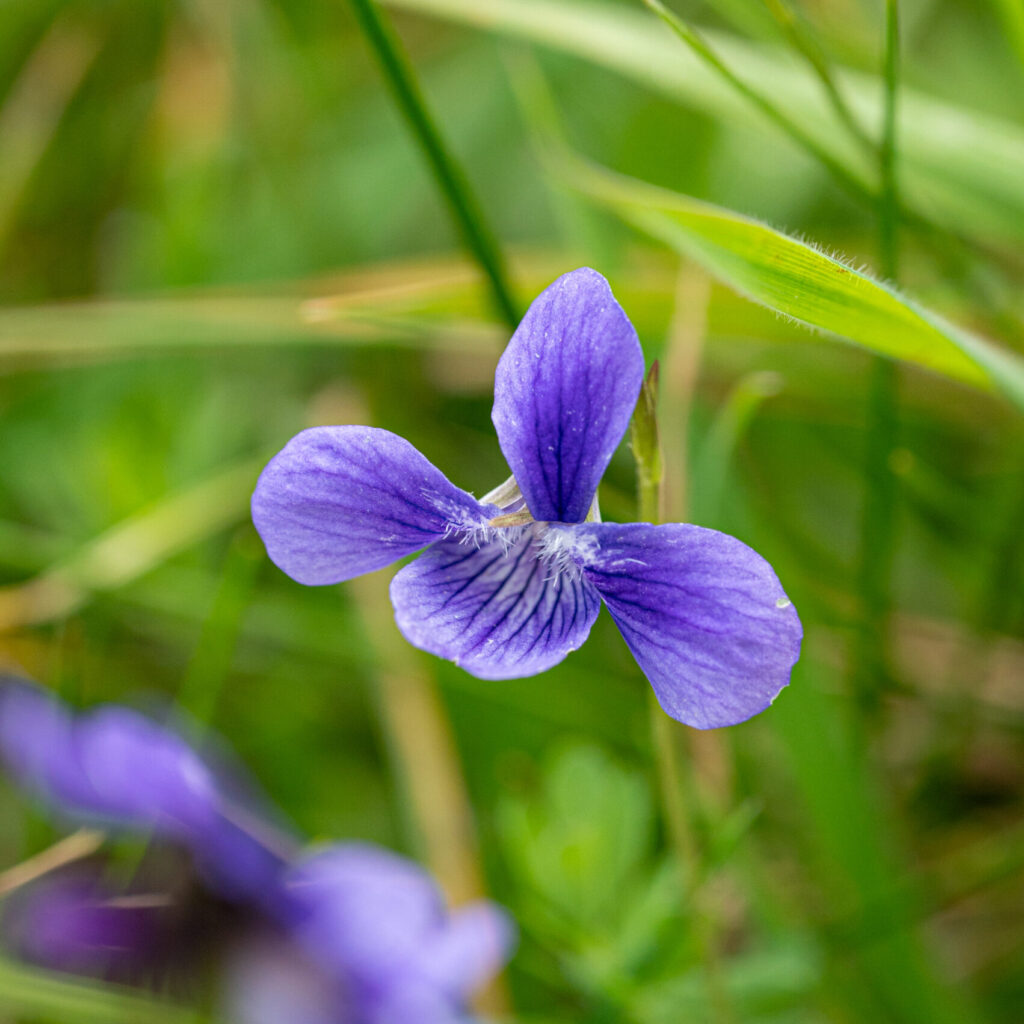
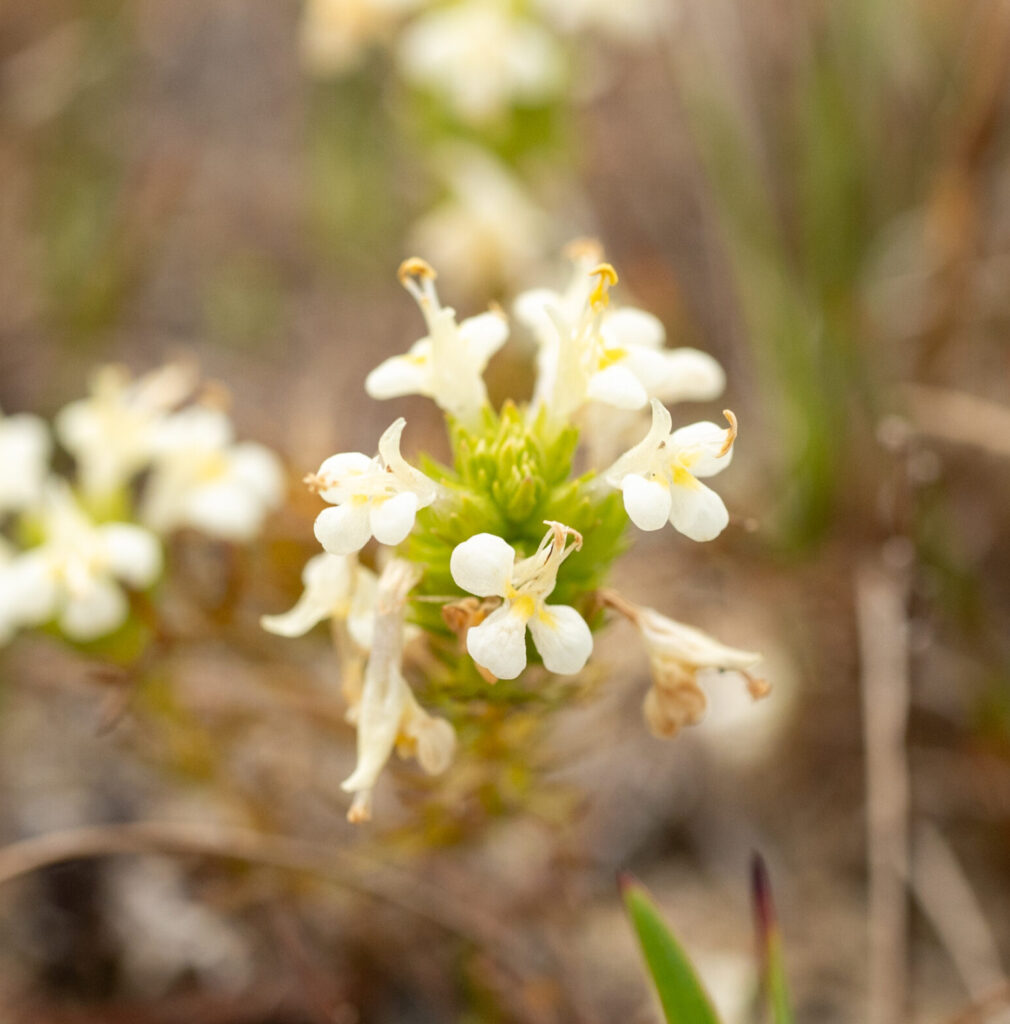
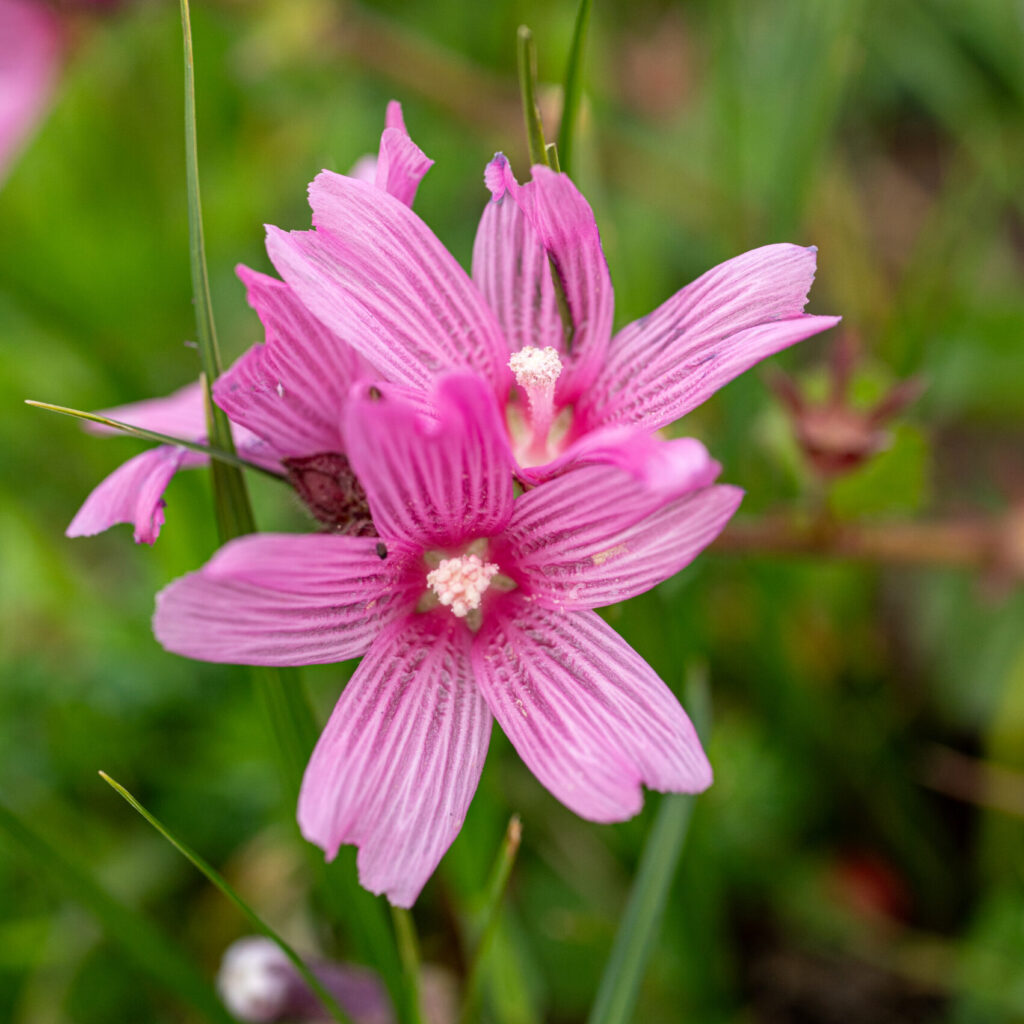
From left to right: Western dog violet, San Francisco owl’s clover, and checkerbloom—all spotted during the violet mapping project. NPS, California Native Plant Society, and the Nature Conservancy are currently conducting additional surveys to map out the Seashore’s endangered plants.
Castañeda and Baxter also plan to continue dog violet surveys next year to learn how the population is responding to targeting grazing. Monitoring efforts such as these offer opportunity for community participation in the large-scale restoration of the Seashore’s grasslands:
“Moving forward, there’s a lot of questions that people will have about the land use change here in the park,” says Castañeda. “Being able to come out, participate in these programs, and have a direct input into this whole process is a great way to build more transparency into this transition phase….it’s really cool that we can all work together to document what’s happening.”
For Baxter, community restoration—which helps foster greater connection to the land and provides an outlet to actively contribute to its flourishing—is invaluable:
“Community restoration is how I began in conservation and I really believe in connecting people to a sense of place and developing interest in what grows here, what’s alive, what birds are here, what’s in my immediate surroundings,” says Baxter. “Point Reyes is such an amazing place that has given back to me over the years, and so it feels very rewarding to give back myself, so it’s a beautiful loop.”
Check Point Reyes National Seashore Association’s events page and follow on social media for current and upcoming volunteer opportunities across the Seashore.
Note: As of August 10th, 2026, the reference to “camellia” was updated to “camassia.“