This May and June, the Seashore abounds with stories of family—from pygmy nuthatches’ collective efforts to raise young, to growing coyote pups, to maternal bonds written in the stars. And too, there are stories of lost families, like the vagrant songbirds who have lost their way during springtime migration. Read these tales and more in the May-June issue of Monthly Marvels, and then head to the Seashore with your own family—chosen or otherwise—to explore Point Reyes’ many unique wonders.
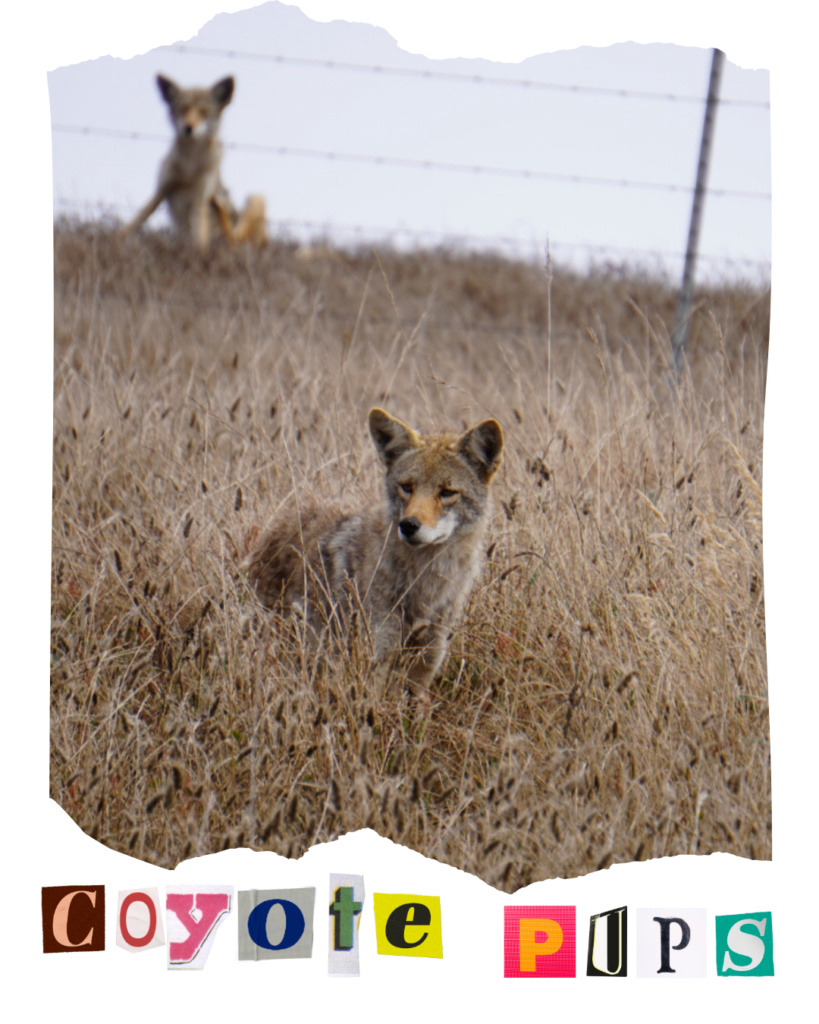
Fluffy Coyote Pups
Across the Seashore, coyote families (Canis latrans) are settling into dens in hollowed out tree stumps, rocky holes, and burrows created by other animals such as raccoons or skunks—and giving birth to their newly born pups. These dark brown babies are deaf and blind, weighing anywhere from just 0.5 to 1 pound. The growing pups nurse on their mother’s milk for the first few weeks, and then begin eating regurgitated food (think partially digested rodents, insects, and birds) provided by their family. Even yearlings (pups who were born last year) pitch in to help by bringing food for the babies.
The canine families will only reside in the dens temporarily to nurse; after outgrowing the space, they’ll begin sleeping in protected areas aboveground, as they do for the majority of the year. Good luck, young ones!
Coyote parents can be protective of their pups during pupping season, and may see dogs as threatening to their babies. It’s important to keep your dog on leash to prevent negative interactions which may occur if your dog tries to investigate a den site or gets close to a coyote.
Boistrous Pygmy Nuthatches
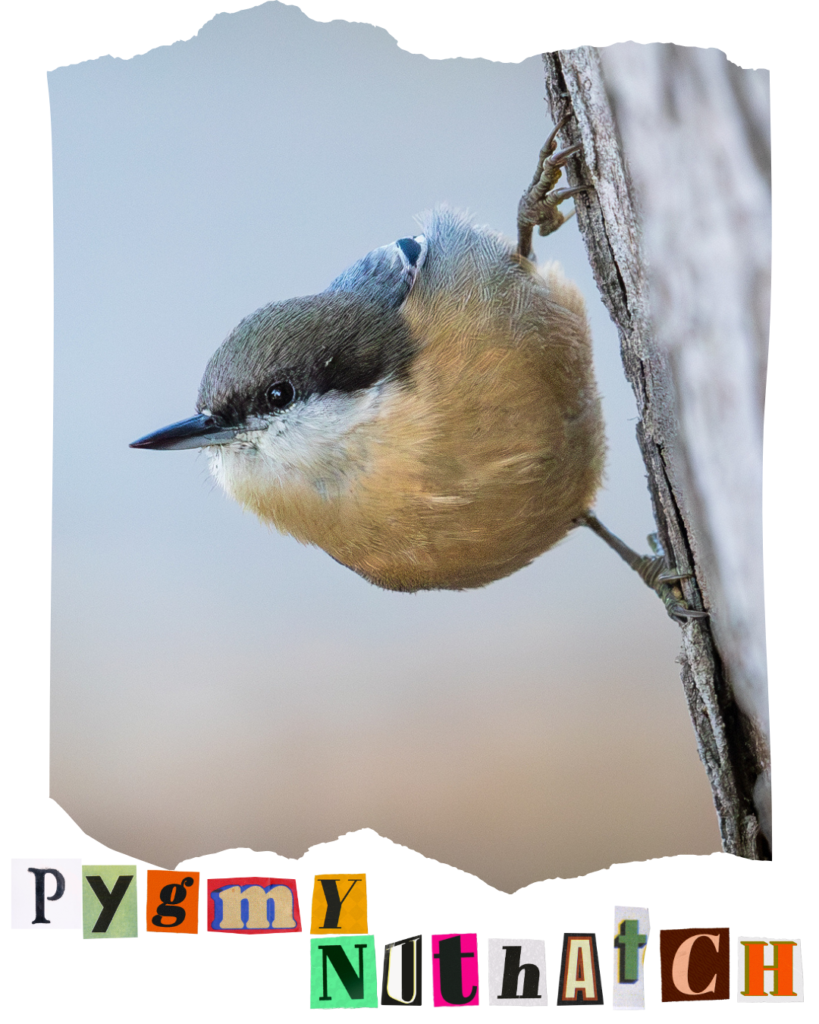
The pygmy nuthatch (Sitta pygmaea) may be tiny…but with the support of their family members, they are mighty. These gray-backed birds are highly sociable throughout the year, loudly peeping at one another, roosting in big groups during the winter season, and traveling together. They also support one another in raising their young throughout the breeding season. In the spring, pygmy nuthatch pairs carefully excavate nest cavities in dead limbs or tree snags in the Seashore’s coniferous forests, lining them with tufts of found fur and feathers, bark fibers, and plant down. 4-9 eggs, speckled with a galaxy of reddish-brown spots, appear in the nests by the end of May.
The hatchlings emerge after 15 or 16 days, and the pygmy’s family members (such as previous offspring) often assist feeding both chicks and brooding females, as well as defending the territory. Researchers have found that pairs which are supported by these “helpers” have more young successfully fledge the nests than those without.
While hiking through the Seashore’s coniferous forests, listen for these noisy birds peeping together.
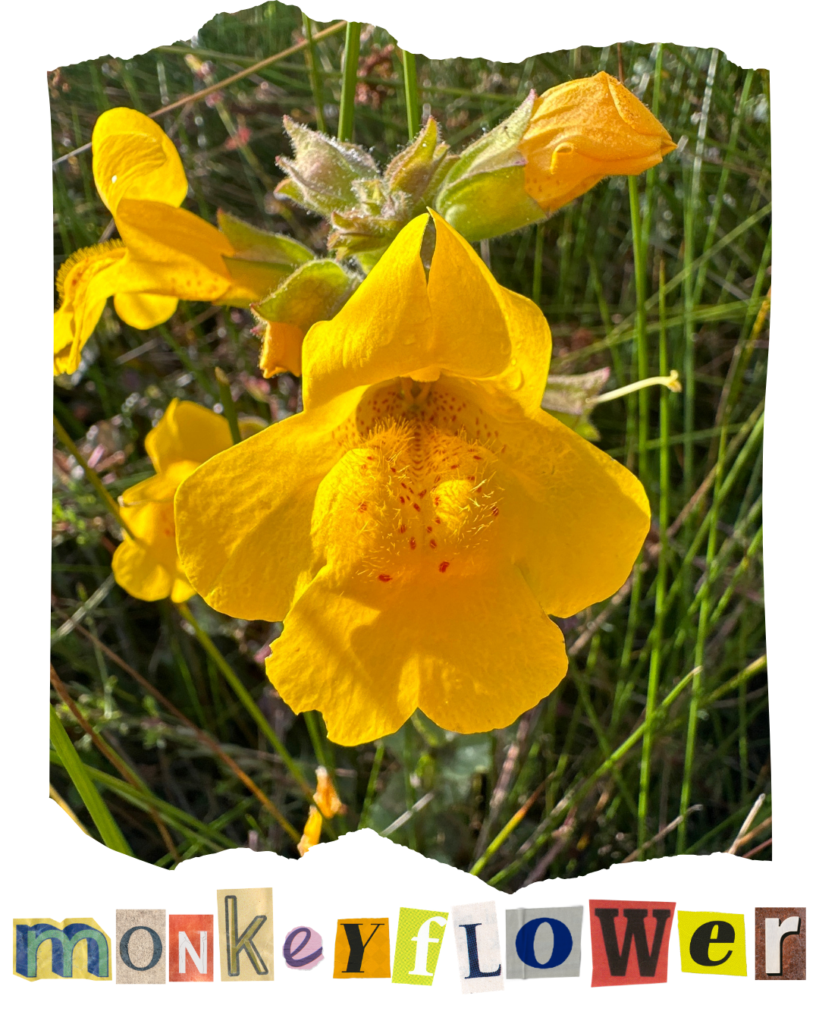
The Wondrous Figwort Family
The Figworts are in town! This May and June, many members of the figwort family (Scrophylariaceae) are in full bloom. There are approximately 2,040 species worldwide, and 36 of them have been spotted here at the Seashore. Members of this family are all annual biennial, or perennial shrubs and herbs.
Some of the figwort family representatives which reside here at the Seashore include the dainty white San Francisco owl’s clover (Triphysaria floribunda), the royal purple twining snapdragon (Antirrhinum kelloggii), and the bright yellow seep monkeyflower (Erythranthe guttata). What incredible diversity in this branch of the evolutionary tree!
Try to spot species in the figwort family along Point Reyes’ vibrant springtime trails—such as McClures Beach Trail, Chimney Rock Trail, or Tomales Point Trail.
Vagrant Birds
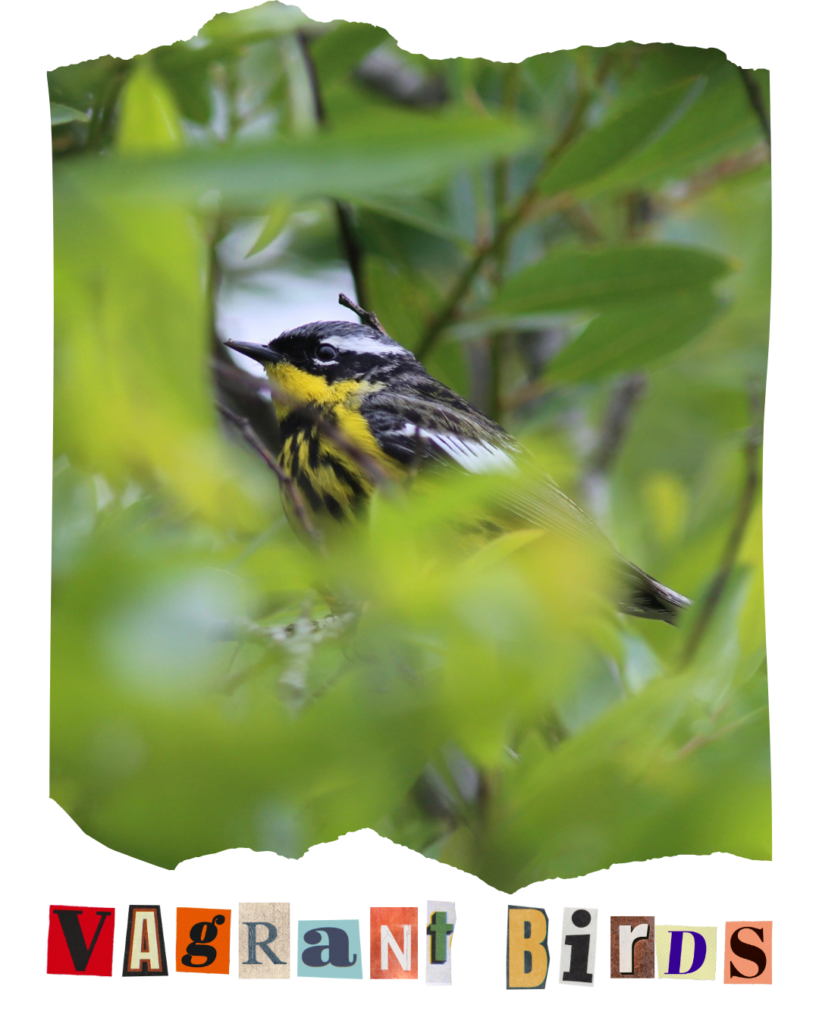
While we celebrate the families of the Seashore, there are a few birds at the Seashore which have lost track of their clan, which are referred to as vagrant birds. “Vagrants” stray outside of their normal ranges and become lost due to storms, or simply by becoming disoriented. Oftentimes, these lost birds will soar above a fog layer, only to realize that they’re flying over the ocean when they drop below the cloudline. They beeline for the nearest piece of land—often around the Point Reyes Lighthouse, which protrudes far into the ocean. At the Seashore, American redstarts, Tennessee warblers, magnolia warblers, and rose-breasted grosbeaks—which all breed in the east and midwest—are common vagrant birds.
The Lighthouse is also a critical stopping point for non-vagrant migrating birds, weary after their long journeys: “I remember being out at the Point Reyes Lighthouse early in the morning and seeing a few migrants just seem to drop out of the sky, landing for the first time after a long night’s flight.” says Mark Dettling, former avian biologist at Point Blue Conservation Science. “It’s just wild to think of such small birds making these huge journeys.”
The best place to spot vagrant songbirds at the Seashore is in the line of Monterey Cypress trees along the path to the Point Reyes Lighthouse.
Families of Stars
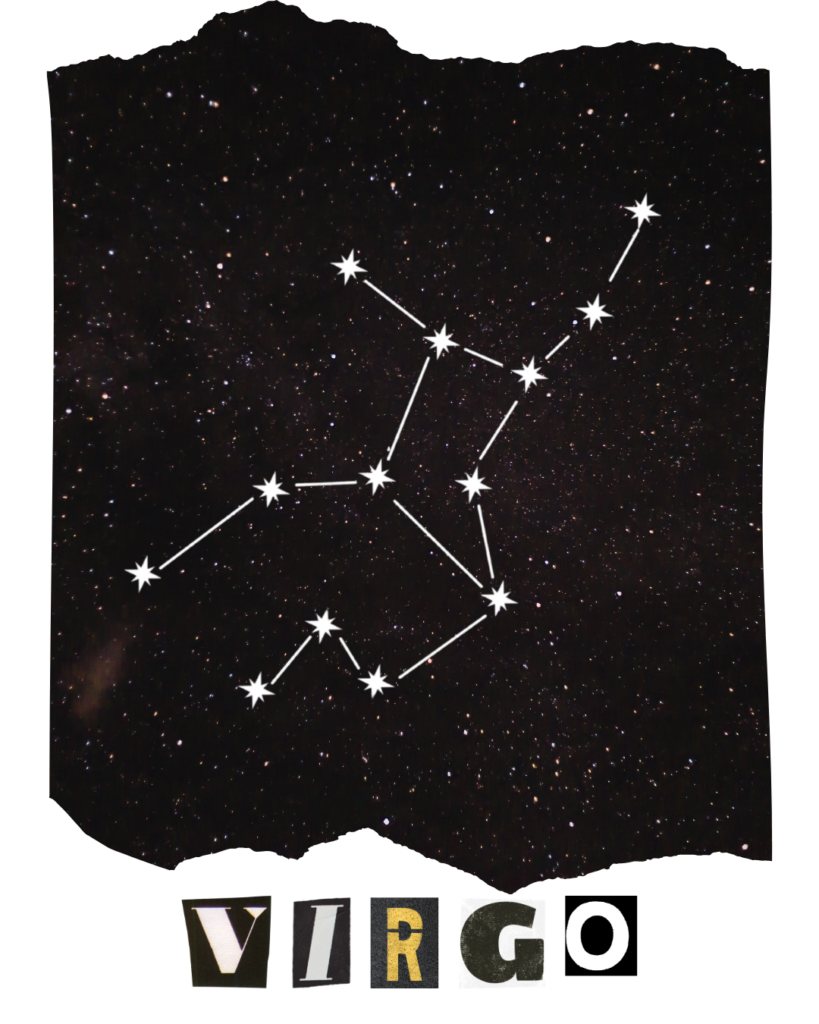
Point Reyes’ skies are abound with families of stars connecting with one another to form infinite stories. At this time of year, the constellation Virgo is shining bright, which many associate with stories of mother and daughter bonds. In Greek mythology, Hades of the Underworld kidnaps Persephone, daughter of the harvest goddess, Demeter. Demeter is distraught, and in turn, crops and fruit stopped growing. Zeus successfully convinces Hades to return Persephone, but Hades is tricky—while she was in the Underworld, Hades gave Persephone a juicy pomegranate, saying that she would not be allowed to leave if she ate it. Persephone had nibbled on six of the seeds; Zeus and Hades compromise that Persephone will have to spend half of the year in the Underworld. From then on, Persephone was allowed to return to her mother’s loving arms each springtime—when Virgo, which depicts Persephone, rises in the sky—after a dark winter in the Underworld.
DarkSky West Marin hosts a monthly stargaze at the Giacomini Wetlands each new moon, led by Astronomer Don Jolley. Since the date and time of each month’s sessions are subject to weather, they are confirmed day-of through a message posted to the site. On a computer, look for Don’s updates on the right hand side of the home page, and on a phone scroll to the bottom of the home page to see the updates.